Corporeal God
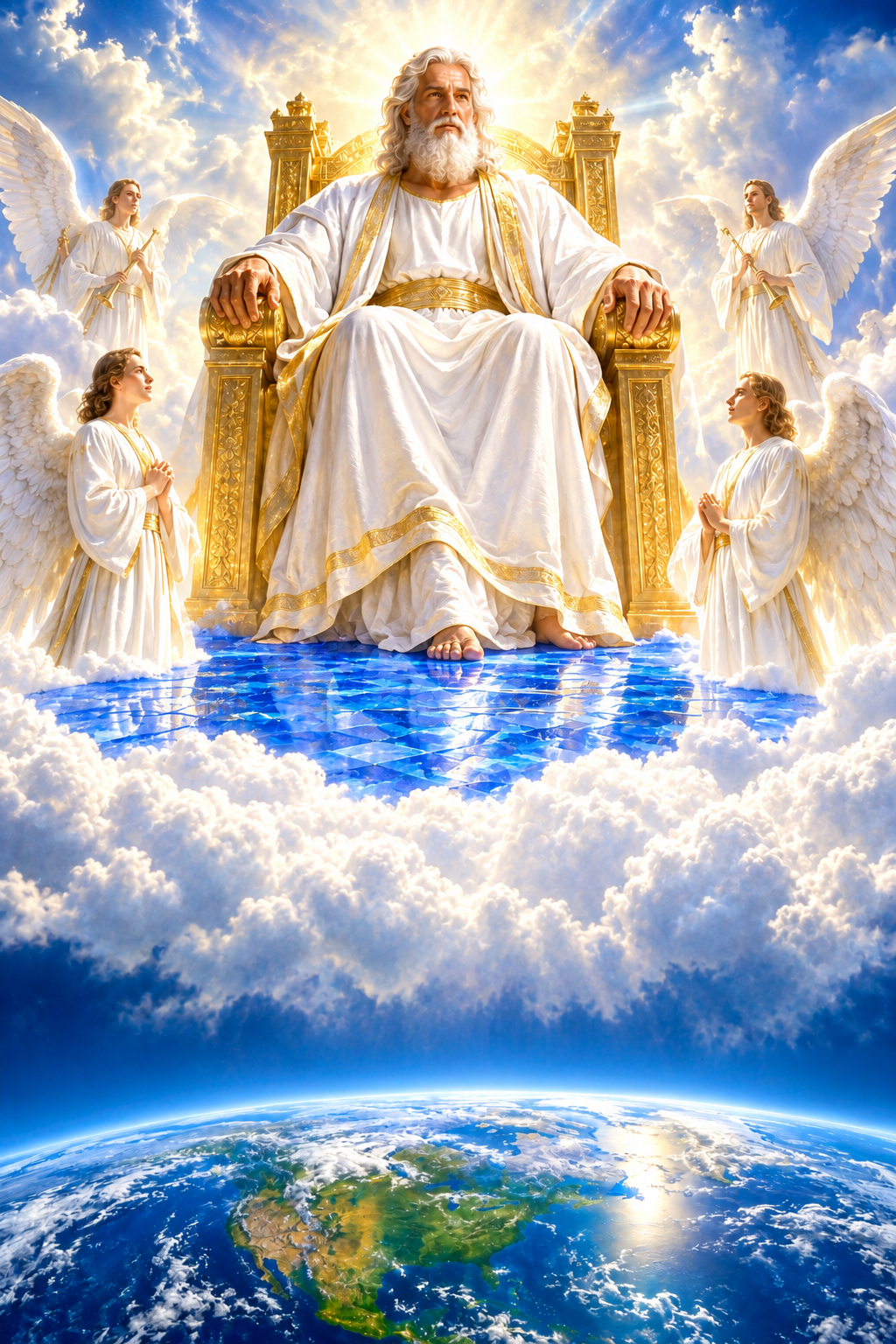
Interaction with Google AI
(A) Which theologians or biblical scholars argued for the embodied view of God?
Several prominent biblical scholars and theologians have argued that the God of the Hebrew Bible and early Christianity is conceived as an embodied, visible, or human-shaped being, challenging centuries of traditional theological views that define God strictly as immaterial and incorporeal.
The most notable scholars leading this conversation include:
1. Benjamin D. Sommer
A Jewish theologian and biblical scholar, Benjamin Sommer is highly influential for his "fluidity model" of the divine. In his research, he argues that the Hebrew Bible frequently portrays God as having a body that can be located in a specific time and place—such as within the Tabernacle or the Jerusalem Temple—and that God's self-manifestation can take on multiple physical forms at once. [1, 2]
2. Francesca Stavrakopoulou
A professor of Hebrew Bible and ancient religion, Stavrakopoulou authored the landmark book God: An Anatomy (2021). She presents a detailed, literal look at the physical attributes ascribed to God in the Old Testament, arguing that the ancient Israelites understood their deity to possess a tangible, flesh-and-blood-like anatomy rather than being an abstract spirit. [1]
3. Brittany E. Wilson
An associate professor of New Testament, Wilson wrote The Embodied God: Seeing the Divine in Luke-Acts and the Early Church (2021). Her work bridges the gap into the New Testament, arguing that many early Jews and Christians envisioned God in visually tangible and embodied ways. She specifically highlights how Luke-Acts depicts God through visible forms and frames Jesus's human flesh as a physical manifestation of God. [1, 2]
4. Mark S. Smith
A renowned biblical scholar, Mark Smith has explored early Israelite anthropomorphism extensively. While he differs slightly from Sommer regarding how fluidly God can appear in multiple places simultaneously, Smith corroborates that the text of the Hebrew Bible routinely depicts God manifesting in distinct, physical shapes and forms. [1, 2]
5. Charles Halton
In his theological book A Human-Shaped God (2021), Halton argues that Christians should embrace the Bible’s bodily depictions of God. He suggests that imagining God with a human-like body and emotions helps believers better understand divine vulnerability, relationship, and presence. [1, 2]
6. Esther J. Hamori
A professor of Hebrew Bible, Hamori is recognized alongside Sommer and Smith for her critical contributions to the study of divine embodiment. Her research focuses on "theophanies" and "christophanies" (physical appearances of the divine) in the ancient Near Eastern context, analyzing the physical interactions humans have with God in scripture. [1]
Are you looking into this topic from a specific religious tradition (e.g., Jewish, mainstream Christian, or Latter-day Saint theology, which has a distinct view on this)? Let me know if you would like to explore how these scholars interpret specific biblical passages where God appears physically.
(B) Can you extract those scriptures quoted by the above authors that support that God is embodied?
The biblical scholars and theologians mentioned previously heavily rely on specific scriptural texts to build their arguments for an embodied God. Rather than viewing these passages as mere metaphors, they analyze them as reflections of how ancient writers literally conceptualized the divine.
The primary scriptures they quote are categorized below by the specific theological arguments they support:
1. The Ish (Man) Theophanies: Literal Physical Interaction
Esther J. Hamori and Charles Halton place immense focus on what Hamori famously classifies as the "ish [man] theophanies". These passages describe God appearing in a physical, human body that interacts with the physical world in ways that are hard to interpret as purely metaphorical.
Genesis 18: God, appearing alongside two angels as three "men," visits Abraham. The text explicitly describes God sitting under a tree, having His feet washed, and eating a literal meal of meat, bread, and milk prepared by Abraham and Sarah.
Genesis 32:22–32: Jacob engages in a literal, all-night physical wrestling match with a "man" (ish). At the end of the struggle, the man blesses him, and Jacob declares, "I saw God face to face, and yet my life was spared" (Gen 32:30).
2. Humanity Made in God’s Physical Shape
Benjamin D. Sommer highlights that the foundational vocabulary used to describe the creation of humanity implies a shared physical form.
- Genesis 1:26–27: "Let us make mankind in our image, in our likeness..." Sommer notes that the Hebrew words used here—tselem (image) and demoot (likeness)—typically refer to concrete, physical shapes or statues elsewhere in the ancient Near East. The text implies that humans share a basic bodily structure (head, torso, limbs) with God.
- Genesis 2–3: The text portrays God acting with physical anatomy—explicitly blowing air from His own nose or mouth into Adam's nostrils (Gen 2:7) and walking through the Garden of Eden on legs during the cool of the day (Gen 3:8).
3. The Kavod (Divine Body) and Visions of Glory
Benjamin D. Sommer and Mark S. Smith heavily cite passages involving God's Kavod (often translated as "Glory"), arguing that in ancient Israelite thought, the Kavod was understood to be God’s physical, luminous body.
- Exodus 24:9–11: Moses, Aaron, and the seventy elders ascend Mount Sinai and literally "saw the God of Israel." The text specifies a physical layout, noting that "under his feet was something like a pavement made of lapis lazuli."
- Exodus 24:16–17: The Kavod of God settles visibly on the mountain. Sommer notes that to the onlookers below, this divine body had mass and appeared like a consuming fire.
- Ezekiel 1:26–28: The prophet Ezekiel experiences a vivid vision of the Kavod. He explicitly describes seeing a throne, and sitting upon it was "a figure like that of a man" from the waist up and the waist down, radiating brilliant light.
- Daniel 7:9: Daniel witnesses a vision of the "Ancient of Days" taking his seat on a throne, possessing white clothing and the "hair of his head was pure like wool."
4. Detailed Divine Anatomy and Bodily Functions
Francesca Stavrakopoulou scans the entire Hebrew Bible to map out verses where God's anatomy is described in highly realistic, non-metaphorical ways.
- Isaiah 66:1–2: "Heaven is my throne, and the earth is my footstool. Where is the house you will build for me?" Stavrakopoulou highlights this to show how ancient writers envisioned God as a giant, localized king sitting on a literal seat with His feet resting on the earth.
- 2 Chronicles 7:15 & 2 Kings 19:16: Passages where God or prophets refer to God's literal sensory organs, such as: "Now my eyes will be open and my ears attentive to the prayers offered in this place."
- Psalm 60:7–8: God speaks of His own geographic domain using highly personal, localized body actions: "Moab is my washbasin, upon Edom I toss my sandal."
- 2 Samuel 22:9–10: David's song describes the physical manifestation of God's anger in highly corporeal terms: "Smoke rose from his nostrils; consuming fire came from his mouth... He parted the heavens and came down with dark clouds beneath his feet."
5. Fluid Bodies and the "Angel of the Lord"
Benjamin D. Sommer utilizes text-critical passages where God's physical boundaries seem fluid, seamlessly shifting between God Himself and a physical messenger.
- Genesis 16:7–13 & Exodus 3:2–4: In these passages (Hagar in the wilderness and Moses at the burning bush), the "Angel of the Lord" appears physically, but the text immediately switches to stating that God is the one standing there speaking. Sommer argues this shows the biblical authors believed God could manifest a smaller, physical "fragment" of His body on earth while remaining vast.
6. New Testament Continuity: The Visible God
Brittany E. Wilson traces these Hebrew Bible concepts into the New Testament to show that early Christians did not immediately abandon the idea of a visible, manifest God.
Luke–Acts: Wilson points to the visual nature of divine manifestations, such as the Holy Spirit descending in a "bodily form like a dove" (Luke 3:22) and the physical, resurrected body of Jesus in Luke 24:39 ("Look at my hands and my feet. It is I myself! Touch me and see; a ghost does not have flesh and bones, as you see I have"), arguing it functions as the ultimate continuity of Israel's embodied God.
Would you like to take a closer look at the linguistic debate surrounding one of these specific passages—for instance, the Hebrew words for "image and likeness" in Genesis or the concept of the Kavod in Exodus?
(C) Look at the Hebrew words for image and likeness
In Genesis 1:26, God states, "Let us make mankind in our image, according to our likeness." In traditional, post-biblical theology—influenced heavily by Greek philosophy—these terms have long been spiritualized to mean humans share God's intellect, free will, or moral capacity.
However, biblical scholars advocating for the embodied view of God, such as Benjamin D. Sommer, argue that the original Hebrew words—tselem (צֶלֶם) and demut (דְּמוּת)—carry a concrete, physical meaning in the ancient Near Eastern context. [1, 2]
1. Tselem (צֶלֶם) – "Image" or "Statue"
The Hebrew word tselem is not an abstract concept; it refers to a concrete, three-dimensional physical shape. [1]
- Literal Meaning: It comes from a root meaning "to carve" or "to cut out," indicating a physical outline, form, or shadow.
[1, 2, 3] - Ancient Near Eastern Context: In the ancient world, a tselem was a physical statue or idol. For example, when a king conquered a distant territory, he would erect a tselem (a physical statue of himself) to project his physical presence and authority where he could not bodily remain. The Bible itself uses tselem to describe literal pagan idols and carved physical structures (e.g., Numbers 33:52, Daniel 3). [1, 2, 3]
- The Embodied Argument: When Genesis says humanity was made in God's tselem, Sommer and other scholars argue that it means humans are physical, living statues sculpted in the exact structural, physical shape of God. We reflect His physical configuration (head, torso, limbs). [1]
2. Demut (דְּמוּת) – "Likeness" or "Visual Resemblance"
The Hebrew word demut functions as a modifier to ensure the reader understands that the resemblance is visual and tangible. [1]
- Literal Meaning: Derived from the root damah (meaning "to resemble" or "to be like"), demut translates to an appearance, blueprint, or structural similarity. [1, 2]
- Biblical Usage: Elsewhere in scripture, demut is used to describe architectural blueprints or physical copies of objects (e.g., 2 Kings 16:10, where a king sends a drawing/model of an altar). Most notably, in Ezekiel 1:26, the prophet looks up at the divine throne and sees a figure with the "appearance [demut] of a man." [1]
- The Embodied Argument: Scholars point out that demut acts as a safeguard. If tselem ("statue") only meant humans function as God's representatives, demut grounds it in visual appearance. It asserts that the physical copy looks visually similar to the original model. [1]
The Ultimate Proof-Text: Genesis 5:3
To prove that these words imply physical heredity and form rather than an abstract spiritual status, Sommer and other scholars point to Genesis 5:3:"When Adam had lived 130 years, he had a son in his own likeness [demut], after his image [tselem]; and he named him Seth." [1]
The exact same Hebrew phrase used for God creating humans is used here to describe Adam fathering Seth. Just as Seth was a physical, flesh-and-blood lookalike who inherited the physical form and characteristics of his biological father, ancient Israelites understood that humanity inherited a physical form modeled directly after God’s own bodily appearance. [1]
Would you like to explore how other ancient Near Eastern cultures (like the Babylonians or Egyptians) used these exact terms for their gods, or see how medieval theologians like Maimonides tried to re-define these Hebrew words to argue against God having a body? [1, 2]
(D) Explore how other ancient Near Eastern cultures (like the Babylonians or Egyptians) used these exact terms for their gods
In the ancient Near East (ANE), the conceptual world surrounding the Hebrew words tselem (image) and demut (likeness) was deeply rooted in the royal and religious practices of the Babylonians, Assyrians, and Egyptians. [1, 2]
When the author of Genesis wrote that humanity was created in the "image and likeness" of God, they were adapting a highly specific political and theological vocabulary that contemporary audiences would have instantly understood. [1, 2]
1. Mesopotamia (Babylonia and Assyria): Ṣalmu and Tamšīlu
In the Semitic languages of Mesopotamia (Akkadian, Babylonian, and Assyrian), the linguistic equivalents to the Hebrew words are ṣalmu (cognate of tselem) and tamšīlu (conceptually parallel to demut).The Physical Ṣalmu (Cult Statues and Royal Monuments)
In Mesopotamian religion, a ṣalmu was a concrete, three-dimensional physical object—specifically a cult statue of a god or a royal monument of a king. [1]
- The Living Idol: The Babylonians did not view a divine ṣalmu as a mere symbolic piece of stone or wood. Through a sacred ritual known as the Mīs Pî ("Washing of the Mouth"), priests ritually animated the statue. Once animated, the ṣalmu was believed to be the literal, physical vehicle through which the god lived, ate, slept, and interacted with humans. [1, 2]
- The Royal Proxy: Because a king could not be everywhere at once, Assyrian and Babylonian kings erected a ṣalmu (a physical statue sculpted in their likeness) in conquered territories. The statue visually projected the king's physical presence, authority, and lordship over that land.
[1, 2]
The King as the Ṣalmu of God
In Babylonian and Assyrian court literature, the king himself was explicitly called the ṣalmu of a particular god. [1]
- A famous neo-Assyrian text states: "The father of the king, my lord, was the very image [ṣalmu] of Shamash, and the king, my lord, is likewise the very image [ṣalmu] of Shamash."
- This meant the king was a physical, flesh-and-blood duplicate of the god on earth, carrying out the deity's physical duties and ruling in his stead. [1, 2]
2. Ancient Egypt: Twt (Tut) and the Pharaonic Image
While Egyptian is not a Semitic language, its royal theology operated on the exact same structural paradigm using the Egyptian word twt (most famously recognized in the name Tut-ankh-amun, which literally translates to "Living Image of the God Amun").
The Pharaonic Flesh-and-Blood Incarnation
Unlike Mesopotamia, where the king was usually considered a representative or "adopted son" of the gods, the Egyptian Pharaoh was considered a literal physical incarnation of a deity on earth (specifically Horus in life, and Osiris in death). [1, 2]
- Physical Manifestation: The Egyptians believed that the creator god's physical essence was physically transferred into the Pharaoh. The king's physical body was the primary vessel through which the gods maintained Ma'at (cosmic order).
- The Ritual of Breath: Similar to the Mesopotamian mouth-washing ritual and the biblical account of God breathing life into Adam's nostrils (Gen 2:7), Egyptian iconography frequently depicts the gods placing the Ankh (the symbol of life) directly to the Pharaoh’s nose to physically animate him. [1, 2]
The Radical Subversion in Genesis 1
Understanding how Babylonians and Egyptians used these concepts highlights exactly why biblical scholars argue for a physically embodied—yet radically democratic—interpretation of Genesis:
By using tselem and demut, the text of Genesis effectively told ancient audiences that God does not live inside a carved stone statue in a temple, nor is His presence limited to a single tyrannical Emperor. Instead, every human being is a walking, breathing, physical statue engineered in the visual architecture of the divine, designated to project God's authority into the physical world. [1, 2, 3]
Would you like to look at the historical transition—how later Jewish thinkers (like Philo of Alexandria or Maimonides) actively worked to detach these words from their physical roots once Greek philosophy gained influence?
(E) Yes look at the historical transition
The transition from a physically embodied view of God to an entirely incorporeal (bodiless) and spiritualized concept is one of the most dramatic shifts in western religious history.
Biblical scholars note that as the biblical era ended and Judaism and early Christianity collided with the Greco-Roman world, the literal Hebrew definitions of tselem (image) and demut (likeness) were radically re-engineered. This historical transformation occurred across three distinct waves.
Wave 1: The Influence of Greek Philosophy (3rd Century BCE – 1st Century CE)
As Judea was Hellenized (influenced by Greek culture), Jewish intellectuals encountered Greek philosophy. Thinkers like Plato taught that the material world was corrupt, changing, and inferior, while the spiritual or intellectual realm was perfect and immutable.
To these Hellenized Jews, the idea of an embodied God with a physical shape, face, or feet felt primitive, pagan, and philosophically absurd.
- The Septuagint (3rd Century BCE): When Jewish scholars translated the Hebrew Bible into Greek, they began subtly softening bodily references to God. For instance, in Exodus 24:10, where the Hebrew text says the elders "saw the God of Israel," the Greek Septuagint translates it as they saw "the place where the God of Israel stood," deliberately shielding God from physical sight.
- Philo of Alexandria (c. 20 BCE – 50 CE): Philo, a brilliant Jewish philosopher from Egypt, launched the first systematic effort to allegorize scripture. He argued that tselem (image) had absolutely nothing to do with the physical body. Instead, Philo claimed the "image of God" was the human Intellect (Nous) and our capacity for reason. To Philo, the human mind was a miniature copy of the cosmic, divine Mind.
Wave 2: The Early Christian and Rabbinic Consolidation (2nd – 5th Century CE)
During the early centuries of the Common Era, both Rabbinic Judaism and nascent Christianity wrestled heavily with this transition.
- Early Christian Debates: Early Christians were deeply divided. While elite theologians trained in Greek philosophy (like Origen and Augustine) argued fiercely that God was purely spiritual, many ordinary Christians and monastic communities still held to an embodied view. In the late 4th century, a massive conflict known as the Anthropomorphite Controversy erupted in Egypt. When the Bishop of Alexandria declared in a letter that God was incorporeal, thousands of desert monks rioted, crying out that their scriptural, human-shaped God had been stripped away from them. Ultimately, Augustine’s philosophical view won out, cementing the spiritualized view in Christian orthodoxy.
- The Targums (Aramaic Translations): In rabbinic circles, Aramaic translations of scripture (Targums) used linguistic buffers. Whenever the Hebrew text mentioned a body part of God, the Targum replaced it with abstract terms like the Memra (the Word of God) or the Shechinah (the Divine Presence) to avoid suggesting God had physical anatomy.
Wave 3: The Definitive Shift by Maimonides (12th Century CE)
Despite centuries of philosophical pressure, many Jews in the Middle Ages still read the biblical descriptions of God quite literally. The definitive death blow to the embodied view within mainstream Judaism was dealt by Moses Maimonides (Rambam), a towering medieval philosopher.
In his masterpiece, The Guide for the Perplexed (1190 CE), Maimonides made it his primary mission to dismantle anthropomorphism.
- Re-defining Tselem and Toar: Maimonides argued that Hebrew possesses two different words for form. He claimed that toar refers to physical, outer contour or bodily shape. He then asserted that tselem does not mean physical shape, but rather the essential form or specific nature of a thing. Therefore, human tselem means the capacity for intellectual apprehension, which separates humans from animals.
- Codifying Incorporeality as Law: Maimonides went a step further than any thinker before him. In his legal code, the Mishneh Torah, he declared that anyone who believes God has a physical body or form is a heretic (Min) who loses their share in the World to Come.
Summary of the Transition
Through this historical evolution, the "human-shaped God" of the ancient Near East was systematically replaced by the "timeless, spaceless, and bodiless" God of classical theology.
We can explore the backlash Maimonides faced from other medieval rabbis who argued he was rewriting history, or look at how the Latter-day Saint (Mormon) movement rejected this historical transition in the 19th century to consciously return to the embodied view. What direction interests you?
(F) Explore the backlash Maimonides faced from other medieval rabbis who argued he was rewriting history
When Moses Maimonides published his legal code, the Mishneh Torah, in 1180, and declared that anyone who believed God had a body was a heretic (Min) who would be cut off from the afterlife, it triggered an immediate and explosive backlash. [1, 2]
This historic conflict—part of the wider Maimonidean Controversies—saw prominent medieval traditionalist rabbis accuse Maimonides of rewriting history, fabricating dogmas, and subverting the true nature of historical Judaism in favor of Greek and Islamic philosophy. [1, 2]
The backlash unfolded through several prominent voices and historic events:
1. The Ravad’s Legendary Rebuke: Defending "Greater and Better" Men
The most famous immediate response came from Maimonides's contemporary, Rabbi Abraham ben David of Posquières (known as the Ravad), a towering Talmudic authority in Provence, France. [1, 2]
When the Ravad read Maimonides's ruling on the incorporeality of God, he penned a fierce, biting critique (hasagah) that is still printed in the margins of nearly every standard edition of the Mishneh Torah today: [1, 2]
"Why has he called such a person a heretic? There are many people greater and better than him who hold such a belief on the basis of what they have seen in verses of Scripture, and even more in the words of those Aggadot [rabbinic homilies] which confuse the mind." [1, 2]
The Ravad’s counter-argument was a historical fact-check to Maimonides's philosophical revisionism:
- A Defense of Ancestral Faith: The Ravad himself did not necessarily believe God had a body, but he was outraged that Maimonides was excommunicating thousands of pious, holy Jews of the past and present who simply took the Bible literally
. [1, 2] - The Invalidation of Tradition: By calling corporealists "heretics," Maimonides was effectively labeling centuries of revered ancient sages, Talmudic rabbis, and faithful communities as infidels. To the Ravad, Maimonides was rewriting Jewish history to make a specific philosophical opinion the mandatory standard of faith. [1, 2, 3]
2. Shadal’s Critique: Accusing Maimonides of "Aristotelian Contamination"
Centuries later, traditionalist scholars continued to argue that Maimonides had hijacked authentic Judaism. The Italian rabbi and scholar Samuel David Luzzatto (known as Shadal, 1800–1865) launched a scathing critique of Maimonides's legacy. [1]
Shadal argued that Maimonides's push for a bodiless, unemotional, abstract God was not authentic Judaism at all, but rather Aristotelian philosophy wearing a Jewish cloak. Shadal maintained that historical Judaism always embraced a deeply personal, emotionally responsive, and tangibly present God—and that Maimonides’s cold, intellectualized deity was a foreign import that distorted the plain meaning of the Torah. [1, 2, 3]
3. The Wider Institutional Backlash: Why the Rabbis Were Outraged
The anger over Maimonides's views on the divine body was compounded by his radical changes to traditional Jewish scholarship, leading to a century of institutional warfare:
- The Omission of Sources: In the Mishneh Torah, Maimonides presented "cut-and-dried" laws without citing his sources or showing the legal debates. Opponents accused him of trying to replace the study of the Talmud entirely. They argued he was acting like an emperor issuing ex cathedra decrees rather than a traditional rabbi. [1, 2, 3]
- The Accusation of Denying the Resurrection: Because Maimonides’s philosophy prioritized the spiritual soul over the physical body, critics like Meir Abulafia of Spain furiously accused him of denying the physical resurrection of the dead—a foundational traditional belief. Maimonides was forced to write a separate Treatise on Resurrection just to defend his orthodoxy. [1, 2]
4. The Climax: Banning and Burning the Books (1232 CE)
The simmering rage eventually boiled over into physical violence. In the early 13th century, a faction of conservative French rabbis led by Solomon of Montpellier grew terrified that Maimonides’s philosophy was causing young Jews to abandon literal scriptural faith and commandments. [1]
- The Ban: In 1232, Solomon of Montpellier issued a formal rabbinic ban on Maimonides’s philosophical works, including The Guide for the Perplexed.
- The Fire: In a tragic turn of history, anti-Maimonidean rabbis reported his books as heretical to the local French Catholic authorities (the Dominicans). The Dominicans readily agreed, seized copies of Maimonides's texts, and publicly burned them in the square of Montpellier. [1, 2, 3]
Through this intense backlash, Maimonides's opponents made it clear that they viewed his incorporeal, philosophical God as an aggressive break from the tangible, text-based tradition their ancestors had practiced for generations. [1, 2]
Would you like to examine how Maimonides defended himself in his letters regarding these accusations, or look at how contemporary biblical scholars (like Benjamin Sommer) actually agree with Maimonides's medieval critics that he was changing the original meaning of the text?
(G) Examine how Maimonides defended himself in his letters regarding these accusations
When the accusations of rewriting history, fabricating dogmas, and covertly denying bodily resurrection reached Moses Maimonides in Egypt, he did not back down. Instead, he launched a fierce intellectual counter-offensive through a series of highly sophisticated personal epistles and treatises. [1, 2]
His defense—found primarily in his Treatise on Resurrection (1191), his Letter to the Sages of Lunel, and his letters to his star pupil Joseph ben Judah—was built on specific theological and rhetorical pillars: [1, 2, 3]
1. The Strategy of Contextual Accommodation: "The Torah Speaks in Human Language"
Maimonides's opponents argued that he was rewriting history because the Bible and the Talmud are overflowing with physical descriptions of God. Maimonides defended himself by utilizing a well-known Talmudic maxim: "The Torah speaks in the language of human beings" (Dibrah Torah ki-leshon bnei adam). [1, 2, 3, 4]
In his letters, he explained that God had to accommodate human limitations. If the Torah had described God to the ancient Israelites as a timeless, spaceless, bodiless metaphysical entity, it would have been totally incomprehensible to them. They would have assumed a bodiless god was a nonexistent god. Therefore, the text used physical terms like "hand," "eyes," and "sitting" simply to make God's real actions relatable to an unphilosophical population. He argued he wasn't changing the text; he was revealing its true, sophisticated intent. [1, 2, 3]
2. Splitting the Population: Elite Truth vs. Popular Necessity
To the Ravad's charge that "greater and better men" believed God had a body, Maimonides offered a biting, elitist counter-defense. He argued that a person could be a genius in tracking complex legal debates in the Talmud while remaining a total novice in theology and metaphysics. [1, 2]
In his correspondence, Maimonides maintained that it was a tragedy that even great rabbis lacked philosophical training. He asserted that while literalism was a permissible "training wheel" for children and the uneducated masses, it was an intolerable sin for advanced religious leaders. He argued that allowing anthropomorphism to go unchecked was a gateway to idolatry, because imagining God as a physical entity ultimately limits Him, violating the fundamental commandment of God's absolute unity. [1, 2, 3]
3. Defending the Lack of Citations: Legal Efficiency, Not Dictatorship
When French rabbis accused him of trying to usurp the Talmud by publishing the Mishneh Torah without source citations, Maimonides wrote a letter explaining his purely practical motives: [1]
- He argued that the diaspora was in a state of crisis, suffering under heavy political persecution, which left Jews without the time or peace of mind to wade through the massive, chaotic ocean of the Babylonian and Jerusalem Talmuds. [1]
- His goal was not to replace the Talmud, but to provide an accessible emergency summary so that everyday Jews wouldn't lose track of how to practically perform the commandments. [1]
4. The Counter-Attack on Resurrection: Distinguishing This World from the Next
The most dangerous accusation Maimonides faced was that his purely spiritual concept of the afterlife meant he secretly rejected the physical resurrection of the dead. To save his reputation, he penned his famous Treatise on Resurrection (1191). [1, 2]
- The Validation: Maimonides stated emphatically that he did believe in literal, physical resurrection. He argued that at some point in history, God would perform a miracle, reuniting souls with physical bodies. [1, 2, 3]
- The Caveat: However, he doubled down on his core philosophy by adding a major caveat. He argued that this physical resurrection is temporary. Those resurrected will eventually die a natural second death. The true, ultimate world-to-come (Olam Ha-Ba) is entirely spiritual, where souls exist as pure intellects without physical needs, physical bodies, or sensory experiences.
Through these defenses, Maimonides framed himself not as an innovator destroying tradition, but as a purgative force restoring biblical monotheism to its pristine, uncorrupted purity after centuries of exile had degraded it into crude, physical literalism.
Would you like to see how modern biblical scholars evaluate this battle—specifically, whether they think Maimonides or his traditionalist critics were actually closer to the original ancient meaning of the biblical text?
(H) See how modern biblical scholars evaluate this battle
Modern biblical scholars and historians view this medieval battle as a fascinating historical paradox. When looking at the clash between Maimonides and his traditionalist critics, modern scholarship overwhelmingly sides with Maimonides’s critics regarding the text, but credits Maimonides with saving the religion. [1, 2]
Modern scholars evaluate the battle through three key insights:
1. Verdict on the Original Text: Maimonides's Critics Were Right
Scholars of the ancient Near East—such as Benjamin D. Sommer, Mark S. Smith, and Francesca Stavrakopoulou—agree that from a purely linguistic and historical standpoint, Maimonides was aggressively rewriting the original meaning of the Bible. [1, 2]
- The "Rabad" Was Factually Accurate: When the Ravad argued that "greater and better" Jews historically believed God had a body, modern history proves him right. Ancient Israelite authors did conceive of God as having a physical form. [1, 2]
- An Anachronistic Reading: Scholars point out that Maimonides was guilty of anachronism—he read 12th-century Neo-Aristotelian philosophy back into a 10th-century BCE Near Eastern text. When Maimonides claimed that tselem (image) meant "intellectual essence," he was inventing a new philosophical vocabulary, not uncovering what the author of Genesis originally intended. [1, 2]
2. The Functional Lie: Necessary "Creative Deception"
Despite his historical inaccuracy, modern scholars do not view Maimonides as a fraud. Instead, they view him as a brilliant theological strategist who engaged in what is sometimes called a "functional lie" or creative re-interpretation to ensure the survival of his faith. [1, 2]
- The Existential Threat of Philosophy: In the medieval Islamic and Western worlds, Aristotelian logic was the absolute standard of truth. If Judaism had insisted on keeping its ancient, human-shaped God, highly educated medieval Jews would have abandoned the religion, viewing it as primitive.
[1, 2, 3, 4] - The Preservation Move: By systematically standardizing the idea that God is completely incorporeal (bodiless), Maimonides successfully modernized Judaism. He made it intellectually defensible in a world dominated by philosophy. Scholars view his allegorical method as a necessary evolutionary step for the religion. [1, 2, 3, 4, 5]
3. A Battle of Two Legitimate Jewish Methods
Ultimately, modern historians look back at this battle not as a fight between "truth and heresy," but as a structural collision between two entirely different, yet legitimate, ways of processing revelation: [1]
- The Traditionalist Method (The Critics): This model prioritizes historical continuity. It argues that the community must remain faithful to the text as it was received, transmitted, and understood by the ancestors, even if it contains logical difficulties or "confuses the mind."
- The Rationalist Method (Maimonides): This model prioritizes logical coherence. It argues that because God is the source of all truth, religious revelation can never contradict human reason. If a literal text contradicts a proven logical reality (like the impossibility of an infinite God having physical boundaries), then the text must be re-interpreted metaphorically. [1, 2, 3]
By understanding this battle, modern scholars highlight that Jewish and Christian theology has never been a static set of rules. Instead, it is an ongoing, vibrant argument between those trying to protect the concrete memories of the ancient past and those trying to translate those memories for the modern world. [1]
Would you like to explore how this same battle over God's body played out in early Christianity (such as the Anthropomorphite Controversy between Greek philosophers and Egyptian desert monks), or see how modern philosophies handle this divide today?
(I) Explore how this same battle over God's body played out in early Christianity
The battle over God’s body in early Christianity followed an almost identical trajectory to the later Jewish debate, moving from an early, widespread acceptance of a visible, human-shaped God to a complete philosophical spiritualization.
This tension reached a violent climax in the late fourth century CE during what historians call the Anthropomorphite Controversy in Egypt.
1. The Early Landscape: The Immaterial Elite vs. The Embodied Masses
In the 2nd and 3rd centuries, early Christianity was sharply divided along intellectual lines:
- The Philosophers: Alexandrian theologians like Clement and Origen were deeply trained in Greek Middle-Platonism. They argued fiercely that God was completely incorporeal, invisible, and passionless. To them, reading biblical descriptions of God's face, hands, or anger literally was a sign of intellectual spiritual immaturity.
- The Traditionalists: The vast majority of ordinary Christians—and the ascetic monks living in the Egyptian deserts—held a deeply literal, text-based view. Influenced by the Hebrew Bible’s theophanies and the physical incarnation of Jesus, they conceptualized God the Father as possessing a glorious, luminous, human-like form.
2. The Spark: Bishop Theophilus’s Festive Letter (399 CE)
The controversy exploded in 399 CE when Bishop Theophilus of Alexandria issued his annual Easter pastoral letter. Seeking to align Alexandria with elite philosophical theology, Theophilus wrote a blistering condemnation of anthropomorphism, declaring that God was entirely without a body or physical parts.
The reaction from the desert monks was immediate and furious. Thousands of monks left their caves, marched on the city of Alexandria, and sparked massive riots. They viewed Theophilus's decree not as advanced theology, but as an existential attack on their faith. They argued that if God had no body, then humans were not actually made in His image, and their intimate, visual relationship with God during prayer was a lie.
3. The Tragedy of Abba Serapion
The human heartbreak of this transition is perfectly captured by the contemporary historian John Cassian, who recorded the story of an old, deeply pious monk named Abba Serapion.
Serapion had finally been convinced by the monks' leaders that the Greek philosophers were right—that God had no physical form. The next morning, the monks gathered for prayer. As Serapion knelt to pray, he realized he could no longer visualize the human-shaped God he had loved his entire life. He broke down weeping, threw himself on the floor, and cried out:
"Woe is me! They have taken my God away from me, and I have no one now to hold on to; I no longer know whom I am adoring or addressing!"
4. The Political Turnaround
Terrified by the rioting monks outside his palace, Bishop Theophilus executed a complete political U-turn. He walked out to the crowds and famously placated them by saying: "When I look at you, it is as if I am seeing the face of God!"
To save his own skin, Theophilus immediately shifted his alliance to the literalist monks. He launched a massive, violent purge against the "Origenists" (the anti-corporealist monks), driving them out of Egypt and labeling them as the heretics.
5. The Ultimate Orthodox Verdict: The Triumph of Augustine
Despite the short-term political victory of the literalist monks in Egypt, the philosophical, bodiless view ultimately won the war in mainstream Christian orthodoxy.
Towering thinkers like Augustine of Hippo in the West systematically dismantled the embodied view. Augustine argued that the "image of God" (tselem) was located exclusively in the human soul—specifically in the tripartite nature of the human mind: Memory, Intellect, and Will.
By the 5th century, classical Christian theology had formally adopted the Greek philosophical definition of God as Actus Purus (Pure Act)—a spaceless, timeless, timeless spirit entirely devoid of physical mass or form. The "human-shaped God" of early Christian monasticism was successfully pushed to the margins of history, preserved only in later movements like the Latter-day Saints.
Would you like to explore how the Latter-day Saint (Mormon) movement directly revived this early Christian view in the 19th century, or see how modern Christian theologians are trying to bring back a version of an "embodied" God through modern eco-theology and feminist theology?
(J) Explore how the Latter-day Saint (Mormon) movement directly revived this early Christian view in the 19th century
In the 19th century, the emergence of the Latter-day Saint (Mormon) movement led by Joseph Smith marked a sudden, radical departure from standard Protestant theology. Operating as a "restorationist" movement, its self-professed goal was to bypass centuries of medieval creeds and return strictly to primitive, first-century Christianity. [1, 2, 3]
In doing so, the early Latter-day Saints explicitly revived the ancient, embodied view of God, mirroring the theological concepts held by the fourth-century Egyptian desert monks and early Israelite writers. They accomplished this restoration through several key developments: [1, 2]
1. The First Vision: Overturning the Creeds
The conceptual foundation of Latter-day Saint theology began with Joseph Smith's First Vision in 1820. Smith recorded that as a 14-year-old boy praying in a grove of trees, he witnessed a vision of two separate, heavenly "personages"—God the Father and Jesus Christ. [1, 2]
- The Visual Reality: Smith emphasized that these two beings stood before him in mid-air and possessed tangible, distinct, human-like forms. [1, 2]
- The Implications: This vision immediately challenged the traditional Nicene and Westminster creeds of mainstream Christianity, which defined God as an invisible, omnipresent essence "without body, parts, or passions." To the early Saints, this vision visually proved that God the Father had a physical, localized form independent of Jesus.
2. D&C 130:22: Defining "Flesh and Bones"
As the movement progressed into its Nauvoo era in the 1840s, Joseph Smith explicitly canonized the doctrine of divine embodiment. In April 1843, he gave a sermon that was later recorded as Section 130, verse 22 of the Doctrine and Covenants: [1, 2, 3]
"The Father has a body of flesh and bones as tangible as man’s; the Son also; but the Holy Ghost has not a body of flesh and bones, but is a personage of Spirit." [1]
- A Direct Echo of Luke: The choice of the phrase "flesh and bones" is highly significant to biblical scholars. It mirrors the exact words the resurrected Jesus used in Luke 24:39 to prove to His disciples that He was not an abstract spirit ("a ghost does not have flesh and bones, as you see I have"). [1]
- Materializing the Father: While mainstream Christianity historically argued that only Jesus possessed a body due to the incarnation, Smith applied this resurrected, material reality to God the Father as well. [1]
3. The King Follett Discourse: Reversing Maimonides and Augustine
In April 1844, just months before his death, Joseph Smith delivered his most famous theological address, the King Follett Discourse. In it, he turned the historical transition completely on its head.
- Where Augustine and Maimonides had argued that humans are only like God in their incorporeal intellect, Smith argued that God is like humans in His bodily reality.
- Smith famously declared: "If the vail were rent today, and the great God who holds this world in its orbit... was to make himself visible... you would see him like a man in form—like yourselves in all the person, image, and very form as a man."
4. Eternal Progression: The Destiny of the Body
For the Latter-day Saints, reviving the corporeal view of God was not just a historical curiosity; it was central to their view of human destiny. [1]
- The Revaluation of Matter: Unlike Greek philosophy, which viewed the material body as a heavy anchor dragging down the soul, Latter-day Saint theology posits that matter is eternal and inherently good. A physical body is considered a mandatory step toward achieving full divine joy.
- The "Image" Realized: Echoing the ancient Mesopotamian and Egyptian context where the "image" implied a shared architecture between the god and the human, the Saints taught that human beings are literally of the same species as God—the literal offspring of deity. Therefore, human bodies are embryonic forms destined to eventually look like, and become like, their embodied Heavenly Father. [1, 2]
Through this 19th-century restoration, the Latter-day Saint movement effectively picked up the theological mantle of the ancient Egyptian monks who had wept centuries prior when the philosophers declared God bodiless. They reintroduced a highly personalized, physically tangible, and anthropomorphic deity to the modern Western world. [1, 2]
Would you like to explore how Latter-day Saint scholars engage with modern biblical scholars (like Benjamin Sommer) on these shared conclusions, or examine the major differences between the LDS view of God's body and traditional Christian theology?