Corporeal God, Part 2
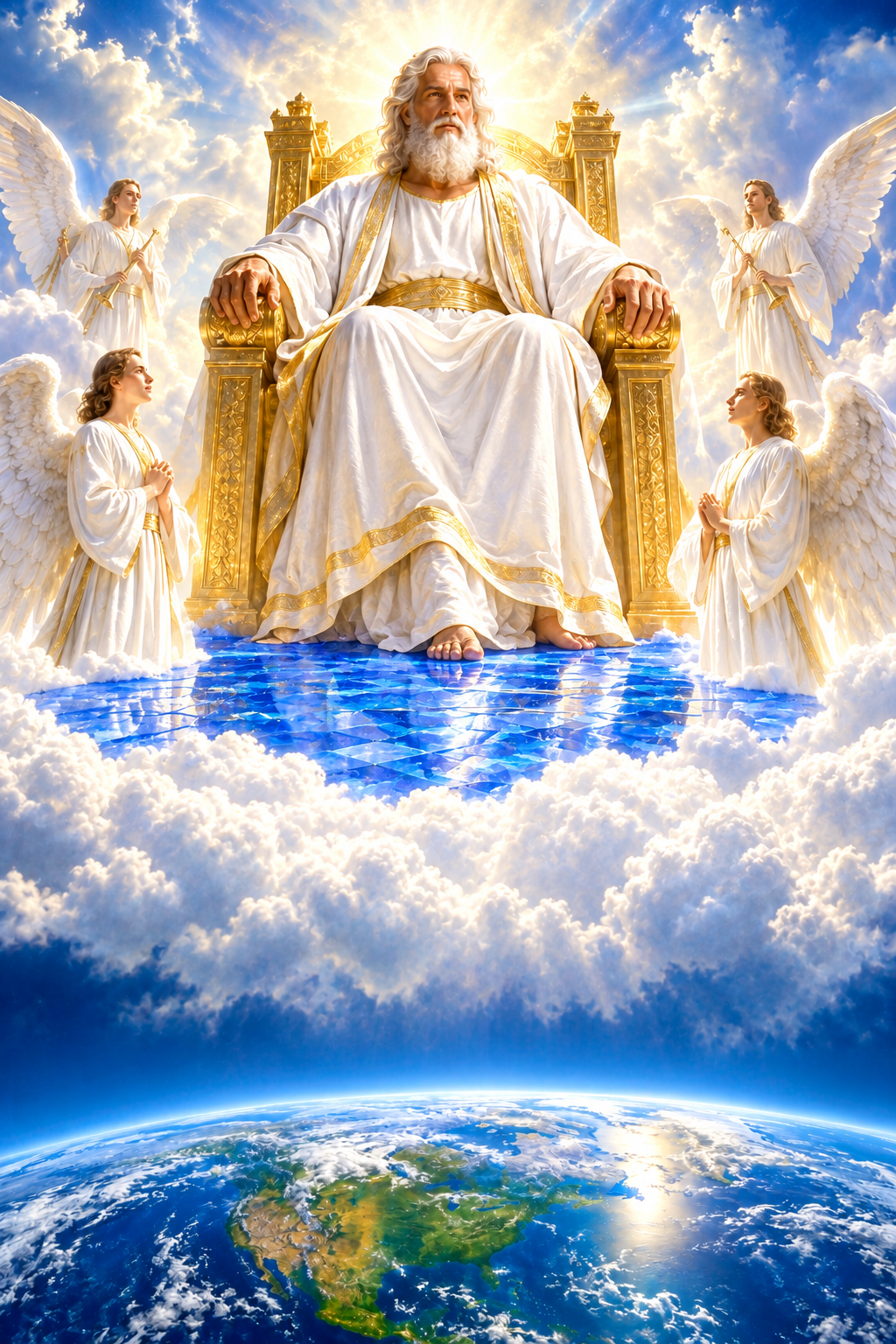
Continued from Part 1
This second part is an interaction with CoPilot
Sub title:
Corporeal or Wholly Other?
(A) What is the origin of the idea that God is unlike anything in the world?
The idea that God is utterly unlike anything in the world originates in the shift from ancient animistic and polytheistic views to monotheism, and was later sharpened by Greek philosophy and medieval theology, which emphasized God’s transcendence and absolute perfection. This concept reflects both religious revelation (especially in the Hebrew Bible) and philosophical reasoning (e.g., Aristotle’s “unmoved mover” and Descartes’ idea of a perfect being).
📜 Historical Roots of the Idea
1. Animism and Polytheism (Prehistoric–Ancient Civilizations)
- Early humans saw divinity in natural forces (rivers, storms, animals). [ This is a general secular perspective. The earliest humans like Adam and Eve and their progeny knew God personally until this knowledge was lost or corrupted. Secular historians do not see or accept this. ]
- Gods were immanent, tied to nature and human affairs.
- Example: Mesopotamian and Greek gods were powerful but flawed, resembling humans.
2. Hebrew Monotheism (c. 2000 BCE onward)
- The God of Israel was radically different: not tied to nature, place, or tribe.
- Seen as Creator of all, moral lawgiver, and sovereign over history.
- This marked the first strong articulation of God as transcendent and incomparable.
3. Greek Philosophy (5th–4th century BCE)
- Philosophers like Plato and Aristotle argued for a divine principle beyond the world.
- Aristotle’s Unmoved Mover: pure actuality, not dependent on matter, unlike anything in the cosmos.
- This philosophical abstraction reinforced the idea of God’s otherness.
4. Medieval Theology (5th–15th century CE)
- Christian, Jewish, and Islamic thinkers (e.g., Augustine, Aquinas, Maimonides) integrated revelation with philosophy.
- God was defined as omnipotent, omniscient, immutable, and infinite—attributes that set Him apart from all created beings.
- Aquinas: God is actus purus (pure act), utterly unlike contingent (?) beings.
5. Descartes and Modern Philosophy (17th century)
- Descartes argued the idea of a perfect, infinite God cannot come from finite minds. [ Does Greek philosophy come from an "infinite" mind? And yet grasped by finite minds? ]
- Therefore, the idea must originate from God Himself, marking Him as beyond all worldly categories.
🔍 Key Distinctions
⚖️ Risks & Debates
- Revelation vs. Philosophy: Some argue transcendence is revealed (e.g., Exodus 3:14: “I AM WHO I AM”), others that it is reasoned.
- Cultural Evolution vs. Divine Revelation: Scholars debate whether monotheism arose naturally from social complexity or from unique revelation.
- Mystical vs. Rational Approaches: Mystics emphasize God’s ineffability, philosophers stress logical attributes.
✅ In short: The idea that God is unlike anything in the world crystallized when Hebrew monotheism broke from nature-bound gods, and was deepened by Greek philosophy and medieval theology, culminating in the modern notion of God as infinite, perfect, and wholly transcendent.
Would you like me to trace this idea specifically through biblical texts (e.g., Exodus, Isaiah, John) to see how Scripture itself frames God’s “otherness”?
(B) Trace this idea specifically through biblical texts
Great, let’s trace this idea of God’s “otherness” directly through biblical texts. The Scriptures themselves repeatedly emphasize that God is not like (?) the created order, nor like human beings. Here are some key passages:
📖 Old Testament Foundations
Exodus 3:14 — “I AM WHO I AM.”
- God reveals Himself to Moses not with a name tied to nature or idols, but with a self-existent identity. This signals that God is unlike anything else in creation.
[ When asked by Moses the name of the authority who would lead the Israelites out of Egypt, so that Moses could inform them, God gave Moses this “name”. My paraphrase: “Just let them know the Self-Existent One authorizes you. I need not reveal all that I am to them at this moment. Whoever I am, they and you will get to know later, they will know better through the demonstrations of my super power and my blinding form. They will see that I am unsurpassable by any other power they have seen on earth. Wait and see. All of you would know soon enough.” ]
Isaiah 40:18, 25 — “To whom then will you liken God, or what likeness compare with him? … To whom then will you compare me, that I should be like him? says the Holy One.”
- Isaiah stresses God’s incomparability, rejecting any attempt to equate Him with idols or created beings. [“Incomparability” by any other power, yes. A superman is not like any other man. More so a super God. His awesomeness is incomparable and unmatchable by anyone! ]
Numbers 23:19 — “God is not man, that he should lie, or a son of man, that he should change his mind.”
- God’s truthfulness and immutability [Integrity, constancy and steadfastness, not immutability as imported into here] set Him apart from human frailty.
Psalm 113:5–6 — “Who is like the LORD our God, who is seated on high, who looks far down on the heavens and the earth?”
- God transcends even the heavens, showing His exalted nature. [God is seated in the third heaven, which is higher than the first two levels of heavens - earth’s atmosphere and where the galaxies are. (2 Cor 12:2) ]
✨ New Testament Development
John 1:18 — “No one has ever seen God; the only God, who is at the Father’s side, he has made him known.”
- God’s invisibility and transcendence are emphasized, with Christ as the unique revelation. [ Transcendence connotes “beyond the earth, beyond physical matter, way up in the heavens, not necessarily unlike anything at all so as to dissolve into abstraction. Christ is there in close physical proximity with the Father, seeing and knowing the Father and hence able to make Him known. Moreover, he looks like the Father, being His exact imprint. Hebrews 1:3 ]
Romans 1:20 — “His invisible attributes, namely, his eternal power and divine nature, have been clearly perceived … in the things that have been made.”
- Creation points to God’s existence, but His essence remains beyond the created order. [ How about angels? ] [ This scripture directly contradicts AI’s comments. God's eternal power and divine nature/essence can be clearly perceived.]
1 Timothy 6:16 — “[God] alone has immortality, who dwells in unapproachable light, whom no one has ever seen or can see.”
- God’s dwelling in “unapproachable light” underscores His radical difference from the world. [ Unapproachable by humans in their current corruptible state, but not forever.]
Revelation 4:8 — “Holy, holy, holy, is the Lord God Almighty, who was and is and is to come!”
- The thrice-holy hymn highlights God’s absolute uniqueness and eternal nature.
[ This highlights God's holiness, not “absolute uniqueness and eternal state.” People are exhorted to be holy like God is holy (1 Peter 1:16; Lev 11:44, 45; 19:2; 20:7, 26; Lev 21:8; 22:32; Ezek 36:38) ]
🔑 Thematic Thread
Across Scripture, the theme is consistent:
- God is incomparable (Isaiah, Psalms).
- God is self-existent (Exodus).
- God is immutable and truthful (Numbers).
- God is invisible and transcendent (John, Timothy).
- God is holy and eternal (Revelation).
Together, these texts form the biblical foundation for the idea that God is utterly unlike anything in the world. [ AI quotes what it has been taught from the popular modern angle and this is given as priority answer, depending on the prompt. ]
Would you like me to map these passages into a structured theological framework (e.g., God’s transcendence, holiness, immutability, invisibility) so you can see how each attribute contributes to the doctrine of divine “otherness”?
(C) Alright, map the passages
Here’s a structured theological framework mapping the biblical passages we discussed to the attributes that highlight God’s “otherness”:
🕊️ Framework of Divine Otherness in Scripture
1. Transcendence
- Exodus 3:14 — God’s self-existence (“I AM WHO I AM”) shows He is beyond created categories.
- Psalm 113:5–6 — God is exalted above the heavens, transcending even the highest realms.
- Isaiah 40:18, 25 — No likeness or comparison can capture Him. [note Romans 1:20 and reflect.]
2. Holiness
- Revelation 4:8 — The thrice-holy hymn emphasizes God’s absolute uniqueness and separateness.
- Isaiah 6:3 (parallel to Revelation) — “Holy, holy, holy is the LORD of hosts” underscores His radical distinction from creation.
3. Immutability & Truthfulness
- Numbers 23:19 — God is not like humans who lie or change their minds. His constancy sets Him apart.
- Hebrews 13:8 (echoing the theme) — Christ as God’s revelation is “the same yesterday, today, and forever.”
4. Invisibility & Inaccessibility
- John 1:18 — No one has seen God; only Christ reveals Him.
- 1 Timothy 6:16 — God dwells in “unapproachable light,” unseen and unseeable.
- Romans 1:20 — His invisible attributes are perceived through creation, but His essence remains beyond it.
5. Eternality
- Revelation 4:8 — God “was and is and is to come,” highlighting His timeless existence.
- Psalm 90:2 — “From everlasting to everlasting you are God.”
📊 Summary Table
✨ Takeaway: The Bible consistently frames God as incomparable, holy, immutable, invisible, and eternal — qualities that mark Him as utterly unlike anything in the world.
Would you like me to visualize this framework as a diagram (e.g., a “Divine Otherness Wheel” with each attribute radiating outward from the center) to make the connections clearer? [ Looking from the popular philosophical framework, AI quotes scriptures nuancing them to echo with that framework, albeit occasionally, a more accurate term like constancy stands out to explain immutability, as seen above. ]
(D) Are there any pushbacks on this Otherness view of God?
Yes — there have been significant pushbacks against the strong “Otherness” view of God. While Scripture and classical theology emphasize God’s transcendence, many traditions and thinkers have argued for a more immanent, relational, or participatory understanding. Here are the main lines of critique:
📌 Biblical Pushbacks
- Immanence in Creation:
- Genesis 1–2: God walks in the garden with Adam and Eve.
Exodus 25:8: “Let them make me a sanctuary, that I may dwell in their midst.”
- These passages stress God’s nearness, not radical separation.
- Incarnation:
John 1:14: “The Word became flesh and dwelt among us.”
- The incarnation challenges the idea of God as wholly unlike the world, since God enters human history in Christ.
- Indwelling Spirit:
1 Corinthians 6:19: “Your body is a temple of the Holy Spirit.”
- God is not only transcendent but also intimately present within believers.
🧠 Theological Pushbacks
Process Theology (20th century):
- Argues God is not immutable or wholly other, but dynamically involved in the world’s becoming. God changes in relation to creation.
Personalist Theology:
- Stresses God’s relational nature — He is not distant but deeply personal, sharing in human experience.
Mystical Traditions:
- Jewish Kabbalah, Christian mysticism, and Sufi Islam emphasize union with God, suggesting that God is not utterly inaccessible but can be directly experienced.
⚖️ Philosophical Pushbacks
Critique of Absolute Transcendence:
Some philosophers argue that if God is utterly unlike the world, He becomes unknowable and irrelevant.
- Example: Ludwig Feuerbach claimed theology projects human qualities onto a distant “Other,” making God a reflection of human alienation.
Panentheism:
- A middle path: God is more than the world but also within it. This challenges the strict “Otherness” by affirming both transcendence and immanence.
🔑 Tension in Theology
Transcendence vs. Immanence:
- The pushback is not a denial of God’s uniqueness, but a call to balance it with His nearness.
Biblical Dialectic:
- Scripture itself holds both truths: God is “high and lifted up” (Isaiah 6:1) yet also “near to the brokenhearted” (Psalm 34:18).
✨ In short: The pushbacks argue that if God is only “Other,” He risks being unknowable and detached. Biblical texts, incarnational theology, and relational philosophies insist that God is both transcendent and immanent — utterly unlike creation, yet profoundly present within it.
Would you like me to chart the tension between transcendence and immanence across traditions (e.g., classical theism, mysticism, process thought, panentheism) so you can see how different schools balance the two?
(E) I would like to have key scriptures that show God has eyes, ears, mouth, hands or limbs just like humans have.
Excellent request — the Bible often uses anthropomorphic language (describing God with human features) to make His actions and presence relatable. Here are key scriptures where God is described with eyes, ears, mouth, hands, and limbs:
👀 God’s Eyes
- 2 Chronicles 16:9 — “For the eyes of the LORD run to and fro throughout the whole earth, to give strong support to those whose heart is blameless toward him.”
- Psalm 34:15 — “The eyes of the LORD are toward the righteous and his ears toward their cry.”
👂 God’s Ears
- Psalm 34:15 — “…and his ears are toward their cry.”
- Isaiah 59:1 — “Behold, the LORD’s hand is not shortened, that it cannot save, or his ear dull, that it cannot hear.”
👄 God’s Mouth
- Deuteronomy 8:3 — “…man does not live by bread alone, but man lives by every word that comes from the mouth of the LORD.”
- Isaiah 55:11 — “So shall my word be that goes out from my mouth; it shall not return to me empty…”
✋ God’s Hands
- Isaiah 48:13 — “My hand laid the foundation of the earth, and my right hand spread out the heavens…”
- John 10:28–29 — Jesus speaks of believers being held securely in God’s hand.
🦵 God’s Arms / Limbs
- Deuteronomy 26:8 — “And the LORD brought us out of Egypt with a mighty hand and an outstretched arm…”
- Isaiah 52:10 — “The LORD has bared his holy arm before the eyes of all the nations…”
🧭 Theological Note
- These descriptions are anthropomorphisms — human terms used to communicate God’s power, care, and presence.
- They do not mean God literally has a body like ours (cf. John 4:24: “God is spirit”), but they help us grasp His actions in human terms.
- The tension is deliberate: God is both Other (transcendent) and yet described in ways that make Him relatable.
✨ So, Scripture balances the “Otherness” of God with vivid human imagery — eyes that see, ears that hear, hands that save — to show He is both beyond us and yet deeply involved with us.
Would you like me to arrange these passages into a devotional framework (e.g., “God sees,” “God hears,” “God speaks,” “God acts”) so they can be used for meditation or teaching?
(F) Are there scriptures that speak of God's heart and other organs not in the above list?
Yes — Scripture does use anthropomorphic imagery beyond eyes, ears, mouth, hands, and arms. It sometimes speaks of God’s heart, face, feet, and even internal organs in metaphorical ways to express His emotions, presence, and actions. Here are key examples:
❤️ God’s Heart
- Genesis 6:6 — “And the LORD regretted that he had made man on the earth, and it grieved him to his heart.”
Jeremiah 31:20 — “Is Ephraim my dear son? … Therefore my heart yearns for him; I will surely have mercy on him.”
- → God’s heart is portrayed as the seat of compassion and grief.
🙂 God’s Face
- Numbers 6:25–26 — “The LORD make his face shine upon you … The LORD lift up his countenance upon you and give you peace.”
Psalm 27:8 — “You have said, ‘Seek my face.’ My heart says to you, ‘Your face, LORD, do I seek.’”
- → God’s face symbolizes His presence, favor, and relational nearness.
👣 God’s Feet
- Isaiah 66:1 — “Heaven is my throne, and the earth is my footstool.”
Exodus 24:10 — “They saw the God of Israel. Under his feet there was something like a pavement of sapphire stone…”
- → God’s feet signify dominion and majesty.
🫁 Other Organs / Inner Parts
- Jeremiah 4:19 — Though speaking of human anguish, prophetic language sometimes parallels God’s own “bowels” or “inner parts” as stirred with compassion (cf. Hosea 11:8).
Isaiah 63:15 — “Where are your zeal and your might? The stirring of your inner parts and your compassion are held back from me.”
- → God’s “inner parts” (literally bowels in Hebrew idiom) express deep emotional movement.
🧭 Theological Note
- These descriptions are figurative — God is spirit (John 4:24), not embodied like humans.
- Yet they reveal His relational nature: grief, compassion, favor, and presence.
- The anthropomorphic language bridges transcendence and immanence, making God’s actions understandable in human terms.
✨ So yes, Scripture does speak of God’s heart, face, feet, and inner parts, extending the imagery of human organs to convey His compassion, grief, presence, and majesty.
Would you like me to compile these into a thematic chart (e.g., “God’s Heart = Compassion,” “God’s Face = Presence,” “God’s Feet = Dominion”) so you can use it as a teaching or meditation tool?
(G) Compile these into a thematic chart
Here’s a thematic chart compiling the anthropomorphic imagery of God’s organs and features, along with their symbolic meaning in Scripture:
📊 Thematic Chart: God’s Human-like Features in Scripture
✨ Takeaway
This chart shows how Scripture uses human imagery to communicate divine qualities. While God is spirit (John 4:24) and not literally embodied, these metaphors reveal His watchfulness, compassion, presence, and power in ways humans can grasp.
Would you like me to expand this chart into a devotional guide (e.g., “God’s Eyes = He sees me,” “God’s Heart = He loves me”) so it becomes a practical tool for meditation or teaching?
(H) When was the concept of anthropomorphism first introduced?
The concept of anthropomorphism — attributing human traits to God, animals, or nature — is as old as religion itself, appearing in prehistoric cultures, but the first explicit critique of it came from the Greek philosopher Xenophanes (c. 570–478 BCE), who argued that humans project their own image onto the gods.
🏛️ Origins of Anthropomorphism
- Prehistoric Roots (before written language)
- Early humans saw faces in clouds, voices in wind, and agency in storms.
- Cave paintings (e.g., Lascaux, c. 17,000 years ago) show blurred human-animal figures, suggesting ritualistic anthropomorphism.
- Ancient Civilizations
- Egyptians depicted gods with human bodies and animal heads (Osiris, Anubis).
- Mesopotamian and Greek deities were human-like in form and emotion (jealousy, love, pride).
📖 Philosophical Critiques
- Xenophanes of Colophon (c. 570–478 BCE)
- Criticized anthropomorphism: “If horses had hands, they would draw their gods as horses.”
- Observed that different cultures imagine gods in their own likeness (Ethiopians dark-skinned, Thracians blue-eyed). [yet the human figure remains the same!]
- His critique marks the first recorded philosophical rejection of anthropomorphism in religion.
- Greek Philosophy (Plato, Aristotle, Stoics)
- Plato and Aristotle sought a more abstract divine principle (e.g., Aristotle’s “Unmoved Mover”).
- Stoics saw the divine as a rational principle but still framed it in human-like terms.
📚 Later Theological Developments
- Medieval Judaism — Maimonides (Guide for the Perplexed, c. 1190) insisted that biblical references to God’s “hand” or “eye” must be read metaphorically, since literal anthropomorphism contradicts divine simplicity. [?]
- Early Modern Philosophy
- Spinoza (Ethics, 1677): denied God has human emotions or intentions.
- Hume (Dialogues Concerning Natural Religion, 1779): critiqued anthropomorphic projection in arguments for God’s design.
⚖️ Key Takeaway
- Anthropomorphism began in prehistoric religion as a way to relate to divine forces.
- Xenophanes (6th century BCE) was the first to explicitly critique it, arguing gods are imagined in human likeness.
- Later thinkers (Maimonides, Spinoza, Hume) refined the critique, but anthropomorphism remains deeply embedded in religious language because it makes the divine relatable.
Would you like me to trace how biblical writers themselves balanced anthropomorphism (e.g., God’s “hand” or “heart”) with statements of His transcendence (e.g., “God is spirit” in John 4:24)? That would show how Scripture itself navigates this tension.[ The above CoPilot response echoes that of the earlier response from Google AI Mode in Part 1 ]
(I) I would like to mount my own pushback to the "Otherness" view of God by examining Scripture using logic and the texts. Go literal instead of metaphorical or allegorical. Can you help me with this?
Perfect — let’s build a logical, text-based pushback against the “Otherness” view of God by going literal with Scripture rather than metaphorical or allegorical. This means treating the anthropomorphic descriptions of God (His eyes, ears, hands, heart, etc.) as real indicators of His nature, not just figures of speech.
🧩 Step 1: Establish the Literal Premise
Genesis 1:27 — “So God created man in his own image, in the image of God he created him; male and female he created them.”
- → If humans are made in God’s image, then human form and faculties (eyes, ears, heart, etc.) reflect something literal about God’s own being.
👀 Step 2: God’s Senses and Perception
- Psalm 34:15 — “The eyes of the LORD are toward the righteous, and his ears toward their cry.”
Isaiah 59:1 — “His ear is not dull, that it cannot hear.”
- → Literally, God has eyes and ears that function to see and hear, not just metaphorically.
✋ Step 3: God’s Hands and Limbs
- Exodus 15:6 — “Your right hand, O LORD, glorious in power, your right hand, O LORD, shatters the enemy.”
Exodus 24:10 — “Under his feet there was something like a pavement of sapphire stone.”
- → God is described with hands and feet, suggesting bodily form. [ God’s feet is stated in the same literalness as the pavement of sapphire stone. ]
❤️ Step 4: God’s Heart and Inner Parts
- Genesis 6:6 — “It grieved him to his heart.”
Jeremiah 31:20 — “Therefore my heart yearns for him.”
- → God’s heart is not just symbolic; it expresses literal emotional faculties.
🙂 Step 5: God’s Face
- Numbers 6:25–26 — “The LORD make his face shine upon you.”
Exodus 33:11 — “The LORD used to speak to Moses face to face, as a man speaks to his friend.”
- → God’s face is presented as a real, visible feature. [ The phrase “as a man speaks to his friend” should clinch the matter. ]
🧭 Step 6: Logical Conclusion
- If humans are made in God’s image (Genesis 1:27), then human faculties mirror divine faculties.
- Scripture repeatedly describes God with literal organs and features (eyes, ears, hands, heart, face, feet).
- To dismiss these as “mere metaphor” undermines the plain reading of the text.
- Therefore, a literalist pushback argues that God indeed has form and faculties akin to humans, though exalted and perfect.
✨ Pushback Summary: Instead of seeing anthropomorphism as metaphor, one can argue that Scripture consistently presents God as having real, embodied attributes. The “Otherness” view risks erasing the plain meaning of the text, while the literalist reading honors the straightforward testimony of Scripture.
Would you like me to develop this into a structured argument outline (like a debate case) so you can use it to formally challenge the “Otherness” view in discussion or teaching?
(J) Develop this into a structured argument outline
Here’s a structured argument outline you can use to mount a literalist pushback against the “Otherness” view of God, grounded in Scripture and logic:
🏛️ Argument Outline: God’s Literal Likeness to Humanity
Thesis
The Bible presents God not as wholly “Other” but as a being with real, human-like faculties. To dismiss these as metaphor undermines the plain meaning of Scripture.
Premise 1: Humans Are Made in God’s Image
- Genesis 1:27 — Humanity is created in God’s image and likeness.
- Logical implication: If humans have bodies and faculties, these reflect something real about God’s own nature.
Premise 2: Scripture Describes God with Human Organs
- Eyes — Psalm 34:15: “The eyes of the LORD are toward the righteous.”
- Ears — Isaiah 59:1: “His ear is not dull, that it cannot hear.”
- Hands/Feet — Exodus 15:6; Exodus 24:10.
- Heart — Genesis 6:6; Jeremiah 31:20.
- Face — Exodus 33:11; Numbers 6:25–26.
- Logical implication: These descriptions are consistent and repeated, suggesting literal faculties.
Premise 3: Literal Encounters with God
- Exodus 33:11 — Moses spoke with God “face to face, as a man speaks to his friend.”
- Genesis 32:30 — Jacob: “I have seen God face to face.”
- Logical implication: These are direct encounters, not allegories.
Premise 4: Incarnation Confirms Embodiment
- John 1:14 — “The Word became flesh and dwelt among us.”
- Logical implication: If God can take on human form in Christ, then human-like faculties are not alien to His nature.
Premise 5: Rejecting Pure Metaphor
- If every anthropomorphic description is dismissed as metaphor, Scripture becomes unintelligible.
- Literal reading preserves the integrity of the text and aligns with the image-bearing doctrine.
Conclusion
God is not wholly “Other.” Scripture consistently presents Him with eyes, ears, hands, heart, face, and feet. Humans reflect His likeness literally, not merely metaphorically. Therefore, the “Otherness” view must be balanced — or even overturned — by the plain testimony of Scripture.
⚖️ Debate Strategy
- Affirm: God has faculties like humans because we are made in His image.
- Challenge: Ask opponents why Scripture repeatedly uses literal organs if they are “only metaphor.”
- Reinforce: Use direct encounters (Moses, Jacob) as evidence of God’s embodied presence.
- Anchor: Point to incarnation as the ultimate confirmation of God’s likeness to humanity.
✨ This outline gives you a debate-ready framework: thesis, premises, conclusion, and strategy.
Would you like me to expand this into a full debate script (opening statement, rebuttal points, closing summary) so you can deliver it as if in a live discussion?
(K) Before going further, I would like to look at more scriptures. Let's look at Hebrews 1:3 describing Jesus as the exact imprint (Greek charakter) of God the Father.
Excellent choice, Tony — Hebrews 1:3 is a crucial text for your pushback, because it explicitly says Jesus is the χαρακτήρ (charaktēr) — the exact imprint or express image — of God’s very essence. Let’s unpack it literally and logically:
📖 Hebrews 1:3 (Literal Rendering)
“Who being the radiance of the glory and the exact imprint (χαρακτήρ) of his substance (ὑπόστασις), and upholding all things by the word of his power…”
🧩 Key Terms
- χαρακτήρ (charaktēr) — literally an engraving, stamp, or impression. In coinage, it meant the exact image pressed into metal.
- ὑπόστασις (hypostasis) — substance, underlying reality, essence.
→ Together: Jesus is the precise, visible imprint of God’s invisible essence.
🔍 Literal Implications
- Exact Imprint = Visible Form
- If Jesus is the exact imprint of God, then God must have a form that can be imprinted.
- This pushes back against the idea of God as wholly “Other” or formless.
- Image Language = Continuity
- Genesis 1:27: Humans made in God’s image.
- Hebrews 1:3: Jesus as the exact image of God.
- Logical link: God’s image is not metaphorical but literal, embodied in Christ.
- Face-to-Face Encounters
- Exodus 33:11: Moses spoke with God “face to face.”
- Hebrews 1:3 confirms that Jesus makes visible what was already true — God has a recognizable likeness.
⚖️ Pushback Argument Using Hebrews 1:3
- Premise 1: Scripture says Jesus is the exact imprint of God’s essence.
- Premise 2: An imprint requires a real, definite form to be impressed.
- Premise 3: Jesus’ human form reflects God’s own likeness, not a metaphor.
- Conclusion: God is not wholly “Other” but has a real, image-bearing form that humans share in — confirmed by Christ as the visible imprint of the Father.
✨ Takeaway: Hebrews 1:3 is one of the strongest texts for a literalist pushback. It ties together Genesis 1:27 (humans in God’s image) and the incarnation (Jesus as God’s image), showing that God’s likeness is not metaphorical but embodied and imprinted.
Would you like me to set Hebrews 1:3 side by side with Genesis 1:27 and Exodus 33:11 in a comparative chart, so you can see how the literal “image” theme runs consistently through Scripture?
(L) Set Hebrews 1:3 side by side with Genesis 1:27 and Exodus 33:11
Here’s a comparative chart setting Hebrews 1:3 side by side with Genesis 1:27 and Exodus 33:11, showing how the theme of God’s image and likeness runs consistently through Scripture when read literally:
📊 Comparative Chart: God’s Image and Likeness
✨ Thematic Connection
- Genesis establishes humans as literal image-bearers.
- Exodus shows direct encounters with God’s face.
- Hebrews confirms Jesus as the exact imprint of God’s essence, tying the image-bearing theme to Christ.
Together, these passages form a strong literalist pushback: God is not wholly “Other” but has a real, image-bearing form that humans reflect and Christ reveals.
Would you like me to expand this into a full logical chain (Genesis → Exodus → Hebrews → Incarnation) so you can use it as a structured case for God’s embodied likeness in teaching or debate?
(L) I would like to add that believers are promised the ability to see God in future, be like Him, and that He will finally come down to dwell with men. Look at those scriptures.
Perfect direction, Tony — let’s gather the scriptures that promise believers will see God, be like Him, and dwell with Him. These passages are central to a literalist pushback, because they imply God has a form that can be seen and shared, not just an abstract “Otherness.”
👀 Believers Will See God
- Matthew 5:8 — “Blessed are the pure in heart, for they shall see God.”
- 1 John 3:2 — “We shall see him as he is.”
- Revelation 22:4 — “They will see his face, and his name will be on their foreheads.”
→ Literal implication: God has a visible form and face that believers will behold.
✨ Believers Will Be Like Him
- 1 John 3:2 — “Beloved, we are God’s children now, and what we will be has not yet appeared; but we know that when he appears we shall be like him, because we shall see him as he is.”
- Romans 8:29 — “To be conformed to the image of his Son.”
→ Literal implication: Believers will share in God’s likeness, not metaphorically but in actual form and glory.
🏠 God Will Dwell With Humanity
- Revelation 21:3 — “Behold, the dwelling place of God is with man. He will dwell with them, and they will be his people, and God himself will be with them as their God.”
- Ezekiel 37:27 — “My dwelling place shall be with them, and I will be their God, and they shall be my people.”
- John 14:23 — “We will come to him and make our home with him.”
→ Literal implication: God will physically dwell among humans, not as a distant abstraction but in embodied presence.
📊 Thematic Chart
✨ Pushback Strengthened: These promises show that God is not wholly “Other.” He has a form that can be seen, likeness that can be shared, and presence that will dwell with humanity. The future hope of believers depends on God’s embodied reality.
Would you like me to integrate these promises into your structured argument outline (Genesis → Exodus → Hebrews → Future Hope) so the case flows from creation, through revelation, to eschatology as one unified pushback?
(M) Add Paul's supporting scripture 1 Corinthians 13:12, confirming 1 John 3:2. Include also Matt 18:10 (angels see the face of the Father) and when believers are glorified they too will see the Father because Psalms 36:9 says "in thy light, we shall see light"
Excellent additions, Tony — these passages reinforce the future hope of believers and strengthen the literalist pushback against the “Otherness” view. Let’s lay them out clearly:
👀 Seeing God Fully
1 Corinthians 13:12 — “For now we see in a mirror dimly, but then face to face. Now I know in part; then I shall know fully, even as I have been fully known.”
- → Paul confirms the promise of direct, face-to-face vision of God, echoing 1 John 3:2.
Matthew 18:10 — “See that you do not despise one of these little ones. For I tell you that in heaven their angels always see the face of my Father who is in heaven.”
- → Angels already behold God’s face; glorified believers will share this privilege.
Psalm 36:9 — “For with you is the fountain of life; in your light we shall see light.”
- → God’s own light enables vision of Him — a literal seeing, not metaphorical.
✨ Being Like Him
1 John 3:2 — “When he appears we shall be like him, because we shall see him as he is.”
- → Seeing God transforms believers into His likeness.
- Romans 8:29 — Believers are “conformed to the image of his Son.”
🏠 Dwelling With Him
- Revelation 21:3 — “Behold, the dwelling place of God is with man. He will dwell with them…”
- Ezekiel 37:27 — “My dwelling place shall be with them.”
- John 14:23 — “We will come to him and make our home with him.”
📊 Expanded Thematic Chart
✨ Pushback Strengthened: These texts show that the believer’s hope is not abstract but embodied — seeing God face to face, sharing His likeness, and dwelling with Him. This makes little sense if God is wholly “Other” and formless; it only makes sense if He has a real, visible, relational presence.
Would you like me to weave all these scriptures (Genesis → Exodus → Hebrews → Paul → John → Revelation) into a single flowing argument chain so you have a ready-made case that runs from creation to eschatology?
(N) Include scriptures that say God sees, hears, speaks from heaven His habitation (a specific location rather than a vague airy concept of "transcendence"), sitting on a throne. Refer also to Ancient of Days of Daniel 7
Excellent — these scriptures add weight to the case that God is not a vague abstraction but One who sees, hears, speaks, and dwells in a specific location — heaven — seated on a throne as the Ancient of Days. Let’s lay them out:
📖 God Sees, Hears, and Speaks from Heaven
- Deuteronomy 26:15 — “Look down from your holy habitation, from heaven, and bless your people Israel…”
- 2 Chronicles 6:21 — Solomon prays: “Hear from heaven your dwelling place; and when you hear, forgive.”
- Psalm 33:13–14 — “The LORD looks down from heaven; he sees all the children of man. From where he sits enthroned he looks out…”
- Nehemiah 9:27–28 — God “heard from heaven” and spoke/delivered His people.
→ Literal implication: Heaven is God’s habitation, a specific location, not a vague “transcendence.”
👑 God Sitting on a Throne
- Isaiah 6:1 — “I saw the Lord sitting upon a throne, high and lifted up; and the train of his robe filled the temple.”
- Psalm 47:8 — “God reigns over the nations; God sits on his holy throne.”
- Revelation 4:2–3 — John: “Behold, a throne stood in heaven, with one seated on the throne.”
→ Literal implication: God is enthroned in heaven, visibly ruling.
🕰️ Ancient of Days (Daniel 7)
- Daniel 7:9–10 — “As I looked, thrones were placed, and the Ancient of Days took his seat; his clothing was white as snow, and the hair of his head like pure wool. His throne was fiery flames…”
- Daniel 7:13–14 — “I saw in the night visions, and behold, with the clouds of heaven there came one like a son of man… And to him was given dominion and glory and a kingdom.”
→ Literal implication: The Ancient of Days is described with visible form (clothing, hair, throne), reinforcing the image-bearing theme.
📊 Thematic Chart
✨ Pushback Strengthened: These texts show God as enthroned in heaven, with a face, voice, and habitation. The “Otherness” view is challenged by the consistent biblical witness that God has a specific location, throne, and visible form — not just an abstract transcendence.
Would you like me to integrate these throne and habitation scriptures into the full Genesis → Exodus → Hebrews → Paul → John → Revelation chain so you have one unified, flowing case from creation to eschatology?
(O) Add Exodus 14:10 then integrate
Perfect, Tony — let’s integrate Exodus 14:10 into the chain and then weave everything together into a unified case that runs from Creation → Revelation → Future Hope → Throne Vision. This will give you a powerful, Scripture-based pushback against the “Otherness” view.
📖 Exodus 14:10
“When Pharaoh drew near, the people of Israel lifted up their eyes, and behold, the Egyptians were marching after them, and they feared greatly. And the people of Israel cried out to the LORD.”
- Here, God hears their cry and acts from His habitation in heaven.
- This reinforces the theme: God is not a distant abstraction but One who literally sees, hears, and responds.
🔗 Integrated Argument Chain
1. Creation: God’s Image
- Genesis 1:27 — Humans made in God’s image.
- Literal implication: Human faculties (eyes, ears, face, heart) reflect God’s own likeness.
- [ A search on the word “image” across both OT and NT shows without doubt that it refers to physical form or shape. Jesus asked the people around him to show a Roman coin and asked them whose “image” was on it. The people replied: Caesar’s, giving a unanimous response that they understood the “image” to refer to the embossed physical shape of Caesar. Matt 22:20, Mark 12:6, Luke 20:24 ]
2. Direct Encounters
- Exodus 33:11 — Moses spoke with God “face to face.”
- Exodus 14:10 — Israel cried out, and God heard and acted.
- Literal implication: God has face, ears, and responsiveness.
3. Exact Imprint
- Hebrews 1:3 — Jesus is the charaktēr, the exact imprint of God’s essence.
- Literal implication: God has a form that can be imprinted and revealed.
4. Seeing and Being Like Him
- 1 John 3:2 — Believers will see Him as He is and be like Him.
- 1 Corinthians 13:12 — “Then face to face.”
- Matthew 18:10 — Angels see the Father’s face.
- Psalm 36:9 — “In your light we shall see light.”
- Literal implication: God has a face and visible glory believers will behold.
5. Habitation and Throne
- Deuteronomy 26:15; 2 Chronicles 6:21; Psalm 33:13–14 — God sees and hears from His habitation in heaven.
- Isaiah 6:1; Revelation 4:2–3 — God sits on a throne.
- Daniel 7:9–10 — The Ancient of Days described with clothing, hair, throne.
- Literal implication: Heaven is a real location, with God enthroned visibly.
6. Future Dwelling
- Revelation 21:3; Ezekiel 37:27; John 14:23 — God will dwell with humanity.
- Literal implication: God’s embodied presence will be with His people forever.
🧭 Unified Conclusion
- From Genesis to Revelation, Scripture consistently presents God as having form, faculties, habitation, and throne.
- Believers are promised to see Him face to face, to be like Him, and to dwell with Him.
- Therefore, the “Otherness” view is incomplete. God is not only transcendent but also embodied, visible, and relational — a reality confirmed by Christ as the exact imprint of the Father.
✨ This integrated chain gives you a creation-to-consummation case: God has a real likeness, interacts with humanity, is enthroned in heaven, and will dwell with His people forever.
Would you like me to format this into a polished debate script (opening statement, supporting points, conclusion) so you can present it as a coherent pushback in discussion or teaching?
(P) Format this into a polished debate script
Here’s a polished debate script you can use to present your pushback against the “Otherness” view of God. It flows from creation to consummation, weaving in all the scriptures we’ve gathered:
🎙️ Debate Script: God’s Likeness and Presence
Opening Statement
Ladies and gentlemen, the prevailing view that God is wholly “Other” — distant, formless, and beyond likeness — fails to account for the plain testimony of Scripture. From Genesis to Revelation, the Bible consistently presents God as One with form, faculties, habitation, and throne. Believers are promised to see Him, be like Him, and dwell with Him. To dismiss these as mere metaphors undermines the literal witness of the text.
Point 1: Creation in God’s Image
- Genesis 1:27 — Humanity is made in God’s image and likeness.
- If humans have eyes, ears, hands, heart, and face, then these reflect God’s own faculties.
- The image-bearing doctrine collapses if God has no likeness.
Point 2: Direct Encounters
- Exodus 33:11 — Moses spoke with God “face to face, as a man speaks to his friend.”
- Exodus 14:10 — Israel cried out, and God heard and acted.
- These are literal encounters, not allegories. God has a face, ears, and responsiveness.
Point 3: Exact Imprint in Christ
- Hebrews 1:3 — Jesus is the charaktēr, the exact imprint of God’s essence.
- An imprint requires a real form. Jesus reveals the Father’s likeness, confirming God is not formless.
Point 4: Seeing and Being Like Him
- 1 John 3:2 — “We shall see Him as He is… we shall be like Him.”
- 1 Corinthians 13:12 — “Then face to face.”
- Matthew 18:10 — Angels see the Father’s face.
- Psalm 36:9 — “In Your light we shall see light.”
- Believers are promised literal vision of God’s face and transformation into His likeness.
Point 5: God’s Habitation and Throne
- Deuteronomy 26:15; 2 Chronicles 6:21; Psalm 33:13–14 — God sees and hears from His habitation in heaven.
- Isaiah 6:1; Revelation 4:2–3 — God sits on a throne.
- Daniel 7:9–10 — The Ancient of Days described with clothing, hair, throne.
- Heaven is a real location, with God enthroned visibly, not a vague abstraction.
Point 6: Future Dwelling with Humanity
- Revelation 21:3 — “The dwelling place of God is with man.”
- Ezekiel 37:27 — “My dwelling place shall be with them.”
- John 14:23 — “We will come to him and make our home with him.”
- God’s embodied presence will dwell with His people forever.
Closing Summary
From creation to consummation, Scripture presents God as One with form, faculties, habitation, and throne. Humans are made in His image, Moses spoke face to face, Jesus is His exact imprint, angels see His face, and believers will one day behold Him and be like Him. God hears from heaven, sits on a throne, and will dwell with humanity.
The “Otherness” view reduces these texts to metaphor, but the literal reading honors the plain testimony of Scripture. Therefore, God is not wholly “Other” — He is embodied, visible, and relational, exalted yet present, the Ancient of Days enthroned in heaven and coming to dwell with His people.
✨ This script is debate-ready: clear opening, structured points, and a strong closing.
(Q) Additional scriptures that speak of 3D space where God and the angels are:
Isaiah 40:22
It is he that sits upon the circle of the earth, and its inhabitants are as grasshoppers; that stretches out the heavens as a curtain, and spreads them out as a tent to dwell in:
::: (a) From the throne where God sits, the inhabitants of the earth appear very small like grasshoppers from that high altitude. Scripture shows this realistic visual view, not meant as an abstraction.
::: (b) God spreads out the heavens beyond His own location so that He dwells within them as in a tent. Scripture provides this illustration as a real visual reality.
Note also that the real Tabernacle of God is in the heavens (See Hebrews 8:5, Exodus 25:9, 40, Acts 7:44), from which the earthly tabernacle in olden times was patterned.
Isaiah 14:13-14
13, For you have said in your heart, I will ascend into heaven, I will exalt my throne above the stars (angels) of God: I will sit also upon the mount of the congregation, in the farthest sides of the north:
14, I will ascend above the heights of the clouds; I will be like the most High.
::: The mount of the angelic congregation (the divine council, along with God) is located some distance above the clouds in the far North, and Satan aspired to be there where God is, as he wanted to be as lofty as God, the most High. The direction of God's throne is up North of the earth. No vague transcendence.
END
Tony Yeap
19 Sept 2026