Christian Philosophy And Paul, Part 2
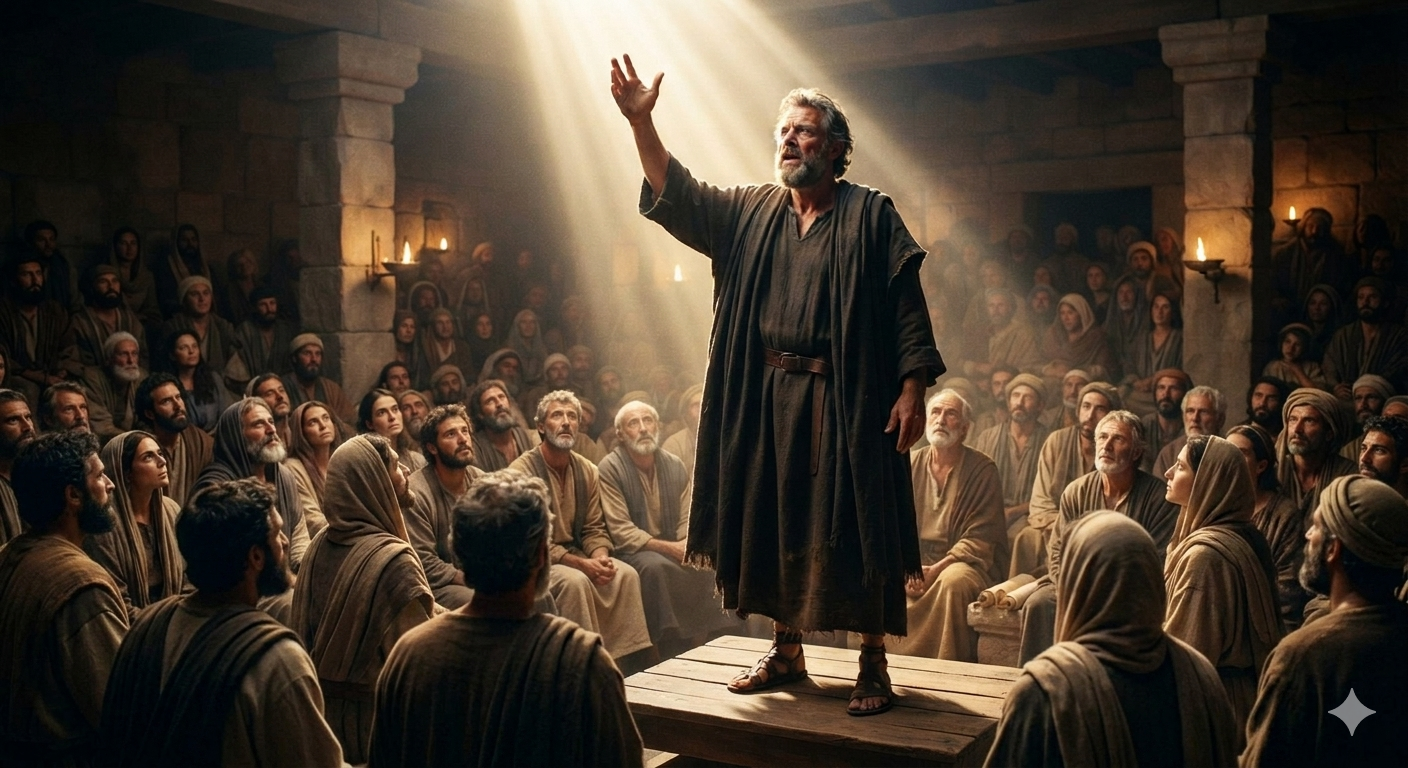
(F) Pivot to Romans 9 to see how Paul addresses the massive philosophical puzzle of Divine Sovereignty vs. Human Free Will.
In Romans 9, Paul confronts what is arguably the most fiercely debated philosophical paradox in intellectual history: the tension between Divine Sovereignty (Theological Determinism) and Human Free Will (Moral Responsibility). [1, 2, 3]
If God is completely in control of who is chosen and who is rejected, how can humans be held morally accountable for their actions? Paul’s treatment of this puzzle is raw, challenging, and philosophically distinct. [1, 2]
The Problem: The Logical Dilemma of Divine Election
In the first half of Romans 9, Paul explains that God’s covenant blessings are not based on human heritage or effort, but entirely on God's sovereign choice. He provides two stark historical examples: [1]
- Jacob and Esau: Before the twin brothers were even born, or had done anything good or bad, God chose Jacob and rejected Esau (Romans 9:11-13). [1, 2, 3, 4, 5]
- Pharaoh: Paul quotes God saying to Pharaoh, "I raised you up for this very purpose, that I might display my power in you." He concludes: "God has mercy on whom he wants to have mercy, and he hardens whom he wants to harden" (Romans 9:17-18). [1, 2, 3, 4, 5]
The Philosophical Objection (Romans 9:19)
Paul is a masterful debater. He knows his readers will immediately spot the logical trap. He acts as his own philosophical opponent and raises the exact question that philosophers have asked for millennia: [1]
"One of you will say to me: 'Then why does God still blame us? For who is able to resist his will?'"
This objection is a perfect logical problem:
- Premise A: If God is completely sovereign, His will cannot be resisted.
- Premise B: If His will cannot be resisted, humans have no genuine free will in the matter.
- Conclusion: Therefore, it is logically unjust for God to blame or punish humans for choices He ultimately determined. [1, 2, 3]
How Paul Resolves the Puzzle
Rather than trying to use clever philosophy to logically blend the two concepts together, Paul fundamentally shifts the philosophical framework using three distinct arguments:
1. The Ontological Argument: The Creator-Creature Distinction [1]
Paul’s first response is not a logical reconciliation, but a reminder of cosmic ontology (the nature of being). [1]
"But who are you, a human being, to talk back to God? Shall what is formed say to the one who formed it, 'Why did you make me like this?' Does not the potter have the right to make out of the same lump of clay some pottery for special purposes and some for common use?" (Romans 9:20-21).
- Philosophical Meaning: Paul argues that the universe is not an egalitarian democracy where God and humans operate on the same plane of accountability. A finite, created being lacks the comprehensive perspective to judge the moral parameters of an infinite Creator. The "right" of the Creator over the creation is absolute. [1]
2. The Compatibilist Framework
Philosophers categorize views on free will into Incompatibilism (free will and determinism cannot coexist) and Compatibilism (they can coexist). Paul operates as a theological compatibilist. [1, 2, 3, 4, 5]
- Throughout the rest of Romans, Paul fiercely defends human free will and responsibility. He commands people to believe, warns them against sinning, and explicitly states in Romans 10:13 that "everyone who calls on the name of the Lord will be saved." [1, 2, 3, 4, 5]
- In Paul’s philosophy, God's sovereign ordaining of history and human moral responsibility are both completely true simultaneously, even if the mechanics of how they meet surpass human comprehension. [1, 2, 3]
3. The Teleological Argument: The Greater Good
Paul implies that God allows this tension to demonstrate His dual attributes of justice and mercy. He asks, what if God bore with great patience the objects of His wrath to make the riches of His glory known to the objects of His mercy? (Romans 9:22-23). [1, 2, 3]
- Philosophical Meaning: History is a grand canvas meant to display the fullness of God's character. The ultimate goal (teleology) of the universe is not human autonomy, but the manifestation of divine glory. [1]
The Historical Philosophical Fallout
Because Paul left this paradox open rather than wrapping it in a neat logical bow, Romans 9 became the ultimate battleground for later Christian philosophies of human agency:
- Augustine vs. Pelagius (5th Century): Pelagius argued humans have total free will to achieve righteousness. Augustine used Romans 9 to crush this view, arguing that human will is totally enslaved by sin and requires sovereign, electing grace to be freed. [1, 2]
- Calvinism vs. Arminianism (17th Century): This chapter is the absolute cornerstone of Calvinism (Divine Determinism/Monergism), which argues God sovereignly predestines individuals to salvation. Arminians (Synergism) counter-argue by reading Romans 9 corporately, asserting Paul is talking about God's sovereign plan for nations (Israel and the Gentiles), not the mathematical pre-programming of individual destinies. [1, 2, 3, 4]
This is one of the heaviest chapters in the Bible. Where should we go next? Let me know:
- Would you like to look at the Arminian vs. Calvinist philosophical breakdown of this specific chapter?
- Do you want to see how Paul balances this heavy determinism with human choice in Romans 10?
- Should we pivot to his practical ethics in Romans 12 to see how a person should live regardless of this paradox?
(G) Look at the Arminian vs. Calvinist philosophical breakdown of this specific chapter.
The philosophical clash between Calvinism and Arminianism is the most famous debate in Christian history, and Romans 9 is the ultimate battlefield. [1]
Both sides look at the exact same words of Paul but apply entirely different philosophical frameworks to interpret them. Their disagreement is not just about vocabulary; it is a deep dispute over the nature of time, justice, human freedom, and God's character. [1, 2, 3, 4, 5]
Here is the structural and philosophical breakdown of how both schools interpret Romans 9.
1. The Calvinist Interpretation: Divine Determinism (Monergism)
The Calvinist framework, formalized by John Calvin (1509–1564), reads Romans 9 as a definitive defense of Unconditional Election and Individual Predestination. [1, 2, 3]
- The Core Thesis: God, before the creation of the world, chose specific individual human beings to be saved, and left others to face just condemnation. This choice was based purely on His sovereign will, not on any future good deeds or choices He foresaw humans making. [1, 2, 3, 4, 5]
- How They Read the Text:
- Jacob & Esau (v. 11–13): Calvinists point out that Paul explicitly states the choice was made before they were born or had done anything good or bad. This is their ultimate proof that salvation is unconditional.
- The Clay & The Potter (v. 21): They take the potter analogy literally regarding human destiny. God has the absolute philosophical right to manufacture some "vessels of wrath" designed for destruction and others for glory. [1, 2, 3, 4, 5]
- Philosophical Underpinning: Calvinism embraces Theological Compatibilism. They argue that God's absolute determination of all events is completely compatible with human moral responsibility. Humans choose to sin freely according to their fallen desires, but God sovereignly ordains those desires. [1, 2, 3, 4, 5]
2. The Arminian Interpretation: Corporate Election (Synergism)
The Arminian framework, founded by Jacobus Arminius (1560–1609), reads Romans 9 through a historical and corporate lens, fiercely defending human free will. [1, 2, 3, 4, 5]
- The Core Thesis: God desires all people to be saved. Salvation is conditional upon a person’s free-will choice to accept or reject God's grace. Therefore, Romans 9 is not about the eternal destination of individual souls, but about God’s sovereign right to use different nations or individuals for specific historical roles. [1, 2, 3, 4]
- How They Read the Text:
- Corporate Identity: Arminians point out that when the Old Testament talks about Jacob and Esau, it explicitly states "Two nations are in your womb" (Genesis 25:23). Paul is not talking about the individuals Jacob and Esau going to heaven or hell. He is explaining why God chose the nation of Israel (Jacob) to bring the Messiah into the world, while bypassing Edom (Esau).
- Pharaoh (v. 17): Arminians argue that Pharaoh was not born pre-programmed to be evil. God used Pharaoh's already wicked heart as an instrument to display His power.
- The Potter (v. 21): They point back to Jeremiah 18 (which Paul is quoting). In Jeremiah, the potter reshapes the clay based on how the clay responds. If the clay ruins itself, the potter molds it into something else. Thus, human response affects how God shapes them. [1, 2, 3, 4, 5]
- Philosophical Underpinning: Arminianism embraces Libertarian Free Will. They argue that for love and morality to be genuine, humans must possess the "power of contrary choice" (the ability to choose A or B). If God pre-determines everything, then human accountability is a philosophical illusion. [1, 2]
Summary of the Philosophical Matrix
The Root Philosophical Divide
Ultimately, the entire debate hinges on one question: What is the primary goal of the universe?
- For the Calvinist, the primary goal is the manifestation of God’s total sovereignty and glory, which includes both His perfect mercy (saving the elect) and His perfect justice (damning the reprobate). [1, 2, 3, 4, 5]
- For the Arminian, the primary goal is a genuine, relational love story between Creator and creation, which philosophically requires humans to have the authentic freedom to reject Him. [Eventually, all rejection will turn (be persuaded) into acceptance at the ultimate end. Early hint: Romans 11:32]
This debate has shaped church history for 400 years. Where would you like to go from here? Let me know:
- Would you like to see how Paul immediately balances this heavy chapter by focusing on human choice in Romans 10?
- Do you want to look at a third alternative philosophical view, like Molinism (Middle Knowledge)?
- Should we jump ahead to his practical, everyday ethical teachings in Romans 12?
(H) See how Paul immediately balances this heavy chapter by focusing on human choice in Romans 10.
If Romans 9 is the ultimate defense of Divine Sovereignty, Romans 10 is the ultimate defense of Human Responsibility. [1]
Philosophically, Paul refuses to let his readers stay trapped in the heavy, deterministic landscape of the potter and the clay. He immediately shifts the gears of his argument to present a beautiful, highly accessible framework of human choice and agency.
Here is how Paul balances the scales in Romans 10.
1. The Pivot: From Sovereign Decree to Human Choice
In Romans 9, salvation looks like a hidden, mathematical calculation made by God before time began. But as soon as Paul moves into Romans 10, he opens up the invitation to the entire human race. [1]
- The Philosophical Shift: He moves from an exclusive framework (God choosing Jacob and rejecting Esau) to a radically inclusive framework. [1]
- The Key Verse (Romans 10:13): Paul writes, "Everyone who calls on the name of the Lord will be saved." [1, 2, 3]
- Philosophical Value: By using the universal term "everyone" (pas in Greek), Paul shatters any idea that humans are helpless pawns who shouldn't bother trying. He places the ball squarely in the human court: salvation is an open offer, but it requires a human action—calling on the Lord. [1, 2, 3, 4, 5]
2. The Epistemology of Faith: High Accessibility
In ancient philosophy, gaining wisdom and ultimate truth was an elite, exhausting pursuit. You had to climb the intellectual ladder, master complex metaphysics, or travel the world to find enlightenment. Paul argues that Christian philosophy is the exact opposite. [1]
- The Argument (Romans 10:6-8): Paul tells his readers not to say, "Who will ascend into heaven?" (to bring Christ down) or "Who will descend into the deep?" (to bring Christ up from the dead). Instead, he says, "The word is near you; it is in your mouth and in your heart." [1, 2, 3, 4, 5]
- Philosophical Value: This is a radical epistemological simplification. Paul argues that the truth is not hidden behind a wall of elite intellect or impossible physical journeys. It is close, simple, and ready to be acted upon by any normal human being using their mouth and heart. [1, 2, 3]
3. The Mechanics of Agency: Heart and Mouth
Paul breaks down how human choice actually works in Romans 10:9–10. He outlines a clear two-step cognitive and behavioral process for human agency: [1]
"If you declare with your mouth, 'Jesus is Lord,' and believe in your heart that God raised him from the dead, you will be saved. For it is with your heart that you believe and are justified, and it is with your mouth that you profess your faith and are saved."
- The Cognitive Step (Believing in the Heart): This is internal intellectual and emotional assent. The human mind and soul evaluate the claims of Christ and choose to trust them as reality. [1]
- The Behavioral Step (Declaring with the Mouth): This is external execution. In the Roman Empire, declaring "Jesus is Lord" was politically treasonous because the mandatory civic confession was "Caesar is Lord." Choosing to speak these words was a radical, public exercise of free will that carried life-or-death consequences. [1, 2, 3]
4. The Logical Chain of Human Cooperation (The Missionary Mandate)
To prove that human choices genuinely matter in history, Paul lays out a brilliant, interconnected chain of cause-and-effect logic in Romans 10:14–15:
[God Sends Preachers] ➔ [Preachers Preach] ➔ [People Hear] ➔ [People Believe] ➔ [People Call out] ➔ [People are Saved]
- The Argument: "How, then, can they call on the one they have not believed in? And how can they believe in the one of whom they have not heard? And how can they hear without someone preaching to them?"
- Philosophical Value: This is the ultimate answer to the lazy fatalism that often arises from Romans 9 (the idea of "If God has predestined everything, I don't need to do anything"). Paul argues that God’s sovereign plan requires human means to succeed. Human agents must choose to go, choose to speak, and choose to listen for the cosmic plan to be realized on earth. [1, 2, 3]
The Big Picture: Paul’s Antinomy
By putting Romans 9 and Romans 10 side-by-side, Paul sets up what philosophers call an antinomy—a contradiction between two laws or principles that are both perfectly valid in their own right. [1]
- Romans 9 looks at reality from the divine viewpoint: God is outside of time, completely sovereign, and in total control.
- Romans 10 looks at reality from the human viewpoint: Humans live inside of time, possess genuine moral agency, and face real consequences for their choices. [1, 2, 3]
Paul refuses to water down either chapter to make the logic easier for us. Instead, his philosophy asserts that human free will is completely real and vital, even while it operates inside a universe completely ordained by a sovereign God.
Now that we have seen how Paul balances divine control and human choice, where should we go next? Let me know:
- Would you like to look at a third alternative philosophical view, like Molinism (Middle Knowledge), which tries to mathematically solve this exact puzzle?
- Do you want to jump into Romans 12 to see how Paul translates these massive cosmic theories into practical, everyday ethics?
- Would you like to see how Paul concludes this entire mystery section in Romans 11?
(I) Jump into Romans 12 to see how Paul translates these massive cosmic theories into practical, everyday ethics.
In Romans 12, Paul pulls off a massive intellectual pivot. For eleven chapters, he has built a towering castle of cosmic philosophy—covering deep metaphysics, universal moral law, divine predestination, and human free will.
Now, he transitions from theory to action. In ancient philosophy, a worldview was useless unless it translated into ethics and orthopraxy (right living). Paul begins this chapter with a word that acts as a linguistic hinge: "Therefore." [1, 2, 3]
Because all those cosmic theories are true, here is how a human being must actually live everyday life.
1. The Epistemological Revolution: The Renewed Mind (Romans 12:1–2)
Paul begins with a radical philosophical command regarding human consciousness and worldview:
"Do not conform to the pattern of this world, but be transformed by the renewing of your mind. Then you will be able to test and approve what God’s will is..."
- De-programming the Mind: The Greek word for "pattern" (schema) refers to the fleeting, superficial fashions and cultural peer pressures of the era. Paul argues that society attempts to force minds into a specific mold. [1]
- The Philosophical Value: Paul is demanding intellectual non-conformity. He argues that true ethical living requires an epistemological overhaul. You cannot live a good life using the broken logic of a fallen world. By renewing the mind through the lens of Christ, human reason is restored, allowing a person to logically evaluate and execute what is good, pleasing, and perfect. [1, 2, 3, 4]
2. The Metaphysical Metaphor: The Body Politic (Romans 12:4–5)
Ancient Greek philosophers like Plato and Aristotle frequently compared a city-state to a human body (the concept of the body politic), where rulers were the head and workers were the hands. Paul hijacks this classic philosophical metaphor but democratizes it. [1]
- The Argument: "For just as each of us has one body with many members, and these members do not all have the same function, so in Christ we, though many, form one body, and each member belongs to all the others."
- The Philosophical Value: This is Paul’s social philosophy. He strikes a perfect balance between individualism and collectivism. He rejects radical individualism (because we belong to each other) but also rejects a collectivism that erases identity (because every member has unique, indispensable gifts). Every human being has distinct ontological value and a specific function to perform for the common good.
3. Virtue Ethics: Genuine Love (Romans 12:9–13)
Paul moves into a punchy list of moral commands that mirror the Virtue Ethics of ancient moral philosophers, but he supercharges them with a new motivational source.
- The Core Premise: "Love must be sincere. Hate what is evil; cling to what is good."
- The Specific Virtues: He lists qualities like honor, patience, hospitality, and diligence.
- The Philosophical Value: Aristotle argued that virtues are habits we build over time to achieve personal excellence. Paul redefines virtue not as a tool for personal honor, but as the outward expression of Agape (self-sacrificial love). Virtue is not about looking noble to your peers; it is about serving your community. [1, 2, 3, 4, 5]
4. The Ultimate Political and Ethical Paradox: Subverting Evil (Romans 12:14–21)
Paul concludes the chapter by tackling how to deal with injustice, enemies, and political oppression—a massive topic in Stoic and Roman philosophy. His solution is a radical masterpiece of psychological and ethical strategy: [1, 2]
- The Strategy: "Do not repay anyone evil for evil... If your enemy is hungry, feed him; if he is thirsty, give him something to drink. In doing so, you will heap burning coals on his head." [1, 2, 3, 4]
- The Philosophical Climax (v. 21): "Do not be overcome by evil, but overcome evil with good." [1, 2]
- The Philosophical Value: Paul introduces a completely counter-intuitive theory of power.
Paul transforms the cosmic, abstract theology of the earlier chapters into a highly practical, street-level manual for a psychological and cultural revolution.
We can continue exploring this ethical framework or see how it stretches into society. Let me know:
- Would you like to compare Paul's ethics here with Aristotle's Virtue Ethics or Stoicism?
- Do you want to move into Romans 13 to see his highly controversial philosophy of Submitting to Government and the State?
- Would you like to look at how he handles cultural differences and disagreements in Romans 14?
(J) Compare Paul's ethics here with Aristotle's Virtue Ethics or Stoicism.
When we compare Paul’s ethical framework in Romans 12 to Aristotle’s Virtue Ethics and Stoicism, we witness a brilliant intellectual intersection.
Paul lived in a Greco-Roman world saturated with these two philosophies. While his moral vocabulary often sounds exactly like Aristotle or the Stoic masters, his ultimate goals, motivations, and definitions of human flourishing are radically distinct. [1]
Here is how Paul’s ethics in Romans 12 stack up against the two dominant ethical systems of the classical world.
1. Paul vs. Aristotle's Virtue Ethics
Aristotle (384–322 BC) argued that ethics is about achieving Eudaimonia (human flourishing or happiness). We achieve this by using our reason to cultivate intellectual and moral virtues (like courage, temperance, and justice), always seeking the "Golden Mean"—the perfect balance between deficiency and excess. [1, 2, 3, 4, 5]
Where They Agree:
- Habitual Practice: Both Aristotle and Paul agree that morality is not just about abstract rules; it is about character transformation. In Romans 12, Paul lists actionable, daily habits (hospitality, patience, hard work) that must become part of who you are.
- The Body Metaphor: Both use the analogy of a body to describe society. Every person has a specific function, and society functions best when everyone fulfills their specific role with excellence. [1, 2, 3]
Where They Radically Diverge:
- The Target Audience (Elitism vs. Egalitarianism): Aristotle’s virtue ethics was highly aristocratic and elitist. He believed Eudaimonia was only truly achievable by free, wealthy, educated Greek men who had the leisure time to contemplate philosophy. Slaves, women, and laborers were naturally incapable of the highest virtues. Paul’s ethics is radically egalitarian. He addresses a mixed church of Roman elites, Jewish minorities, and house slaves, telling everyone they have indispensable gifts and virtues to offer the body (Romans 12:4-6). [1, 2]
- The Ultimate Goal: For Aristotle, the goal of virtue is personal honor and excellence (arete). You act virtuously so you can be a noble, admirable specimen of humanity. For Paul, the goal of virtue is entirely self-sacrificial love (Agape) toward others. Virtue is not about personal glory; it is about building up the community. [1, 2, 3, 4, 5]
2. Paul vs. Stoicism
Stoicism, championed by thinkers like Seneca and Epictetus, argued that the path to peace lies in mastering one's emotions, conforming to cosmic reason, and achieving Apatheia (freedom from emotional suffering and passions). [1, 2, 3]
Where They Agree:
- Non-Conformity to the Crowd: The Stoics fiercely believed in independent thinking, refusing to let the chaotic opinions of the masses dictate their inner peace. This perfectly mirrors Paul’s command in Romans 12:2: "Do not conform to the pattern of this world."
- Response to Enemies: Stoics believed that getting angry at an enemy was irrational and harmful to oneself. Paul similarly commands his readers to bless those who persecute them and refuse to repay evil for evil (Romans 12:14, 17). [1, 2, 3]
Where They Radically Diverge:
- Emotional Empathy vs. Detachment: This is the most glaring divergence. A Stoic sought emotional detachment so that other people's tragedies could not disrupt their inner tranquility. If a friend is crying, a Stoic might offer logical comfort but must not emotionally join in. Paul commands the exact opposite in Romans 12:15: "Rejoice with those who rejoice; mourn with those who mourn." Paul demands deep, vulnerable, emotional empathy. [1, 2, 3]
- The Motivation for Non-Retaliation: When a Stoic ignores an insult, they do it for their own mental tranquility (ataraxia). It is an act of intellectual superiority. When Paul commands non-retaliation (Romans 12:20), it is an act of aggressive love meant to shock and redeem the enemy ("heaping burning coals on his head"). The Stoic detaches from the enemy; the Christian seeks to transform the enemy. [1]
Summary Philosophical Matrix
Ultimately, Paul took the best ethical intuition of the ancient world—that humans need transformation, social harmony, and non-retaliation—and detached it from human pride and intellectual elitism. He anchored it instead in humility, communal unity, and the self-giving love of God.
We have mapped out how Paul's personal and communal ethics compare to the greatest minds of antiquity. Where should we explore next? Let me know:
- Would you like to move into Romans 13 to see his highly debated political philosophy on how Christians should relate to secular government?
- Do you want to look at Romans 14, where Paul handles the philosophical problem of moral gray areas and differences of opinion within a community?
- Would you like to look at how another modern philosopher, like Friedrich Nietzsche, violently critiqued Paul's ethics of love and humility?
(K) You mentioned Immanuel Kant earlier. Are his thoughts relevant to be considered at this point?
Yes, Immanuel Kant (1724–1804) is highly relevant at this point. Kant represents the absolute peak of Enlightenment moral philosophy, and his work directly interacts with—and sometimes tries to secularise—the exact biblical ethics Paul outlines in Romans. [1, 2, 3, 4]
Kant famously wrote in his Critique of Pure Reason that he "had to deny knowledge in order to make room for faith," and his entire ethical framework acts as a fascinating bridge (and point of friction) with Pauline thought. [1, 2]
Here is how Kant’s thoughts collide with Paul’s ethics in Romans 12.
1. The Categorical Imperative vs. Universal Law
Kant’s most famous contribution to ethics is the Categorical Imperative, a rule of pure reason used to determine moral duty. Its first formulation is the Universalizability Principle: Act only according to that maxim whereby you can at the same time will that it should become a universal law. [1, 2, 3]
- The Connection to Paul: Kant argues that morality must be completely universal, with absolutely no exceptions made for yourself. This is a philosophical echo of Paul’s argument in Romans 2 and 12. When Paul commands, "Do not repay anyone evil for evil" (Romans 12:17), he is establishing a universal maxim. If everyone retaliated, society would collapse into logical contradiction and chaos. Both thinkers demand absolute, unwavering moral duties regardless of personal feelings. [1, 2, 3, 4, 5]
2. Treating Humans as "Ends" vs. The Image of God
The second formulation of Kant's Categorical Imperative states: Act in such a way that you treat humanity, whether in your own person or in the person of any other, never merely as a means to an end, but always at the same time as an end. [1]
- The Convergence: Kant argues that because humans are rational, autonomous agents, they possess intrinsic value and dignity; they cannot be used as tools. [1, 2, 3, 4]
- The Underlying Difference: While Kant bases this dignity on human reason, Paul bases it on theology. In Romans 12, Paul demands that we love sincerely and honor others above ourselves (Romans 12:9-10). To Paul, you treat a person as an "end" because they are created in the image of God and belong to the same "body" as you. Kant secularized the biblical concept of human sanctity into a rule of logic. [1, 2, 3]
3. The Clashing Motivations: Cold Duty vs. Agape Love
This is the most massive philosophical rift between the two. Kant argued for "Duty for duty's sake". He believed that an action is only truly moral if it is done out of pure reverence for the moral law. [1, 2, 3]
- Kant's View on Love: Kant was highly suspicious of emotions. He distinguished between pathological love (emotional, fleeting feelings) and practical love (acting out of duty). He argued that if you feed a poor person because you feel sorry for them, your act has no true moral worth, because it was driven by a fleeting emotion rather than duty. [1, 2, 3]
- Paul's Response: Paul completely rejects this cold, duty-driven framework. In Romans 12:9, he explicitly commands: "Love must be sincere." In his companion letter, 1 Corinthians 13:3, Paul delivers a direct counter-strike to what would later become Kant's philosophy: "If I give all I possess to the poor... but do not have love, I gain nothing." For Paul, the motivation must be love (Agape), not just a sterile tracking of obligation. [1]
4. The Source of Power: Self-Legislation vs. The Renewed Mind
- Kant's Autonomy: Kant believed in absolute human autonomy. He argued that the human mind is capable of "self-legislation"—meaning human reason alone can figure out the moral law and human willpower alone can execute it.
- Paul’s Realism: Paul’s entire argument in Romans is that human willpower is fundamentally broken by sin (Romans 7). We cannot self-legislate our way to perfection. That is why Romans 12:2 does not say "fix your behavior with your own logic"; it says "be transformed by the renewing of your mind." The power to execute virtue comes from divine transformation, not raw human intellect. [1, 2, 3, 4]
Summary: The Ultimate Hand-Off
As The Gospel Coalition points out, Kant’s philosophy provides a brilliant secular proof for why universal moral laws are attractive and logically necessary. However, Kant leaves humans in a cold, rigid world of duty. Paul takes those exact same high moral standards but infuses them with warmth, empathy, community, and the spiritual power to actually carry them out. [1, 2, 3, 4]
Kant opens up a massive debate on the boundaries of reason and faith. Let me know where you want to go next:
- Would you like to see how Kant's strict "no lying" rule clashes with Paul's ethics of saving life?
- Do you want to return to Romans to look at Romans 13 and how Christians should view secular legal authority?
- Would you prefer to examine Romans 14 to see how Paul deals with cultural and moral disagreements?