Christian Philosophy And Paul, Part 3
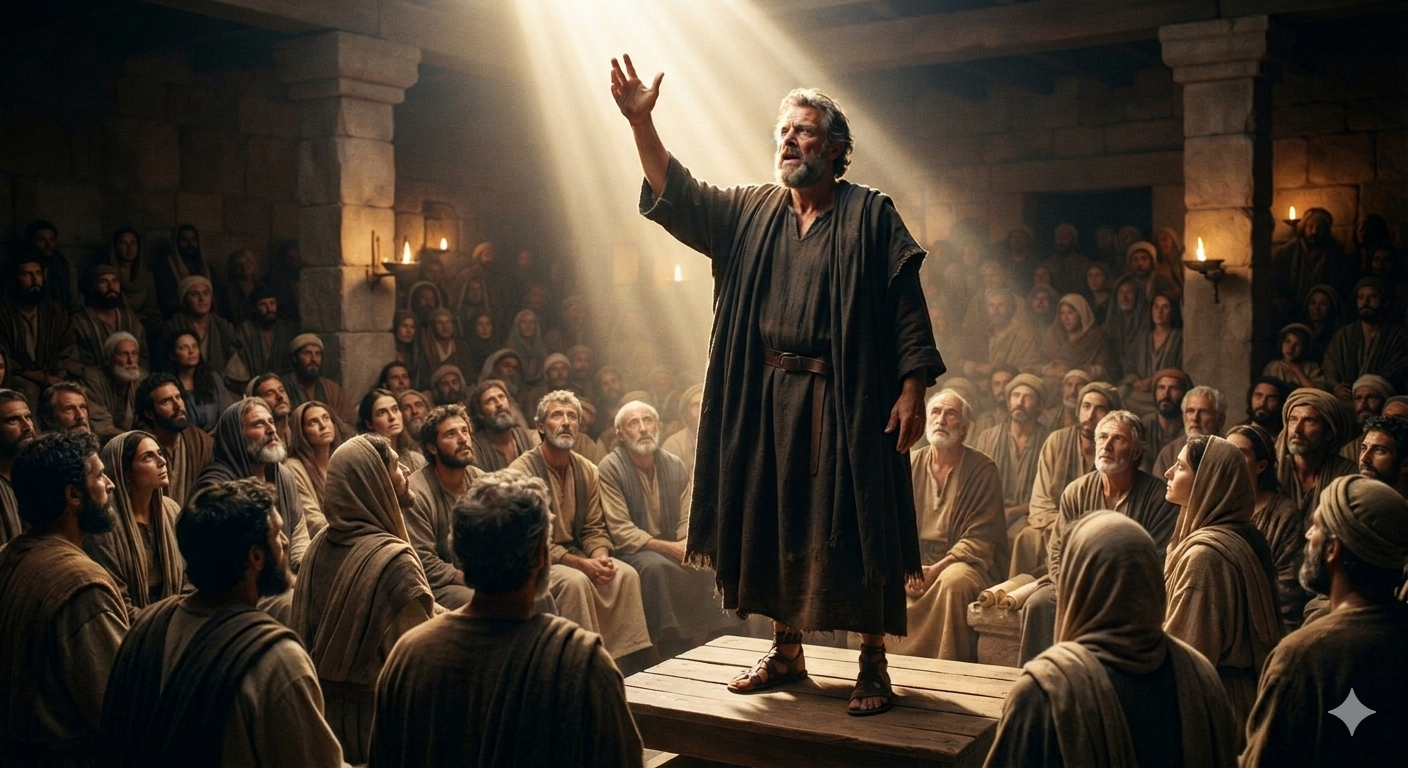
(L) See how Kant's strict "no lying" rule clashes with Paul's ethics of saving life.
The clash between Immanuel Kant’s absolute prohibition on lying and the broader framework of Pauline and biblical ethics is one of the most famous showdowns in moral philosophy. [1]
It highlights the fundamental division between a philosophy based on rigid logical consistency (Kant) and a philosophy based on hierarchical value systems driven by love (Paul). [1]
1. Kant's Ultimatum: The "Murderer at the Door"
Kant’s position on lying is fiercely uncompromising. In his infamous essay, On a Supposed Right to Tell Lies from Benevolent Motives, Kant presents a radical thought experiment: [1, 2]
Imagine an innocent friend is hiding in your house. A known murderer knocks on your door, looks you in the eye, and asks if your friend is inside.Kant argues that you must tell the murderer the truth. According to his Deontological (duty-based) framework, lying is a "perfect duty" violation. If you lie—even a "white lie" to save your friend—you break the moral law. Kant's logic dictates that: [1, 2]
- Lying destroys human trust globally.
- It treats the murderer as a mere pawn rather than an autonomous rational agent.
- If you lie and say your friend left, but your friend actually snuck out the back window and the murderer catches them on the street, you are morally and legally responsible for that death because your lie caused the chain of events. [1, 2, 3]
2. The Pauline Counterpoint: Graded Absolutism
While Saint Paul writes in Colossians 3:9 to "Do not lie to each other," Christian philosophy handles the "murderer at the door" dilemma through a framework known as Graded Absolutism (or Ethical Hierarchy). This system aligns directly with Paul’s theology in Romans. [1, 2]
- The Moral Hierarchy: Unlike Kant, who views all moral duties as flat, equal, and absolute, Pauline thought recognizes that some moral laws are greater than others. [1]
- The High Command of Life and Love: In Romans 13:9, Paul argues that all individual moral commandments are summed up in this one ruling virtue: "Love your neighbor as yourself." [1]
- The Biblical Precedent: Throughout scripture, preserving innocent life always trumps strict verbal truthfulness to an evildoer. In the Bible, Hebrew midwives lie to Pharaoh to protect newborn babies, and Rahab lies to soldiers to save the lives of innocent spies. Both are explicitly praised by God for their righteous actions, because protecting life out of love is a higher moral obligation than telling the truth to a murderer. [1, 2, 3, 4]
3. Deception vs. Malicious Falsehood
In Christian philosophy, there is an intellectual distinction between a lie and justified deception. [1]
- Kant defines a lie purely mechanically: saying something that contradicts what you know to be true.
- Christian thinkers (and some nuanced interpreters of Paul) argue that truth is a matter of justice. A malicious killer at your door has no moral right to the information that would allow them to commit a murder. Withholding the truth from them, or actively deceiving them, is not an act of malice; it is a defensive act of justice to restrain evil (aligning with Paul’s view in Romans 12:21 to "overcome evil with good"). [1, 2, 3]
Summary: The Structural Divide
Ultimately, Kant’s philosophy results in a rigid, cold system where keeping your own abstract logical record clean is more important than preventing a murder. Paul’s philosophy rejects this. In the Pauline universe, a clean logical record means nothing if it requires sacrificing your neighbor to a killer, because a cold, loveless compliance with rules is the ultimate failure of the moral law. [1, 2, 3, 4]
This highlights the stark limit of Enlightenment logic when compared to theological ethics. Let me know how you'd like to proceed:
- Would you like to look at Romans 13 to see Paul's philosophy on when citizens should obey or disobey the legal authority of the State?
- Do you want to examine Romans 14 to see how Paul sets up a framework for handling moral gray areas where people disagree?
(M) Look at Romans 13, then Romans 14.
As Paul transitions into Romans 13 and Romans 14, he applies his renewed-mind philosophy to two intensely practical and potentially explosive areas: a Christian's relationship to political power (the State), and a Christian's relationship to cultural differences within their own community. [1]
Romans 13: The Philosophy of the State
In Romans 13:1–7, Paul introduces a foundational political philosophy. Writing to believers living under the pagan, authoritarian Roman Empire, Paul delivers an unexpected command: [1, 2, 3, 4]
"Let everyone be subject to the governing authorities, for there is no authority except that which God has established."
1. The Divine Mandate of Governance
Paul argues that human government is not an accidental evolutionary tool or a necessary evil. It is a divine institution designed by God to prevent anarchy and restrain human sin. [1, 2, 3, 4]
- The Ruler as God's Servant: Paul shockingly refers to the secular ruler as "God’s servant for your good" (Romans 13:4). The state’s primary philosophical purpose is justice: to praise good behavior and punish bad behavior. [1, 2, 3, 4, 5]
- The Monopoly on Force: Paul notes that the state "does not bear the sword for nothing" (Romans 13:4). This is a biblical root for what political philosophers like Thomas Hobbes would later call the "monopoly on the legitimate use of physical force." [1]
2. The Limits of Authority (The Missing Context)
On its surface, Romans 13 looks like a blank check for absolute submission to dictators. However, Christian political philosophers read Romans 13 in harmony with the rest of the letter and the Bible: [1, 2]
- Conditional Authority: A ruler is only functioning as "God's servant" if they are actually punishing evil and rewarding good. If a government flips this script—punishing the good and rewarding the evil—it loses its moral authority. [1, 2, 3, 4, 5]
- Acts 5:29 Principle: When the state commands something that directly violates God’s law, Christian philosophy invokes the ultimate boundary clause stated by Peter: "We must obey God rather than human beings." Submission to the State is always subordinate to submission to God. [1, 2, 3, 4, 5]
Romans 14: The Philosophy of Moral Gray Areas
In Romans 14, Paul pivots from macro-politics to micro-community dynamics. The early Roman church was split between Jewish believers (who kept kosher laws and celebrated Jewish holidays) and Gentile believers (who ate everything and viewed all days as equal). [1, 2, 3, 4]
Rather than picking a side and enforcing a uniform rule, Paul invents a brilliant philosophical framework for moral liberty and conscience. [1]
1. "Disputable Matters" and the Absolute Right of Conscience
Paul categorizes these cultural differences as "disputable matters" (Romans 14:1)—issues that are not absolute matters of good vs. evil, but rather moral gray areas. [1, 2, 3, 4, 5]
- The Argument: Paul writes, "One person considers one day more sacred than another; another considers every day alike. Each one should be fully convinced in their own mind" (Romans 14:5). [1]
- Philosophical Value: Paul defends the liberty of conscience. He asserts that on non-essential issues, humans have the freedom to think, evaluate, and choose their own conviction, and they are answerable to God alone—not to the judgment of their peers. [1, 2, 3, 4, 5]
2. The Law of the "Weaker Brother"
Paul introduces a beautiful twist to prevent this personal freedom from turning into selfish arrogance. He divides the community into the "strong" (those with a free conscience) and the "weak" (those with a sensitive, easily offended conscience). [1, 2, 3]
- The Command to the Strong: Paul tells those who have freedom that they must willingly limit their own liberty if exercising it would cause a weaker person to stumble or violate their own conscience. [1]
- The Philosophical Value: This is a philosophy of communal love over individual rights. Paul argues that having the "right" to do something does not mean it is loving to do it. Freedom is not the right to do whatever you want; it is the power to willingly sacrifice your preferences for the peace and unity of the community. [1, 2, 3]
Summary of the Structural Shift
| Feature | Romans 13 (The State) | Romans 14 (The Community) |
| Core Theme | Submission to civil authority. | Mutual submission in moral gray areas. |
| Primary Goal | Civic order and public justice. | Communal peace and unity in diversity. |
| The Ruling Principle | Restraining evil via the "sword." | Protecting consciences via "love." |
| How to Live It | Pay taxes, respect laws, honor leaders. | Stop judging others on non-essential issues. |
By pairing these two chapters, Paul shows that Christian philosophy is highly adaptable. It provides a structured, orderly framework for dealing with secular governments, while providing a deeply gracious, flexible, and loving framework for handling internal human disagreements. [1]
We have walked through the entire intellectual engine of the Book of Romans! To close out our exploration, let me know:
- Would you like to look at the historical fallout of Romans 13—specifically how it was used (and misused) during the Protestant Reformation or WWII?
- Do you want to see how the framework of Romans 14 can be applied to modern cultural gray areas today?
- Would you like a brief summary of how all these pieces connect back to our original question about what Christian philosophy is?
(N) Look at the historical fallout of Romans 13—specifically how it was used (and misused) during the Protestant Reformation or WWII.
Because Romans 13 explicitly commands submission to earthly governments, it has historically been weaponised by authoritarian regimes to demand absolute, unquestioning compliance. When stripped of its surrounding context (the ethical framework of Romans 12 and 14), it becomes a highly dangerous tool of political manipulation. [1, 2, 3]
Two of the most profound historical examples of this fallout occurred during the Protestant Reformation and World War II.
1. The Protestant Reformation and the German Peasants' War (1524–1525)
During the Reformation, Martin Luther radically challenged the spiritual authority of the Pope. However, to prevent his religious movement from turning into a chaotic political rebellion, Luther leaned heavily on Romans 13 to support the secular German princes who protected him. [1, 2, 3]
- The Crisis: In 1524, over 300,000 impoverished German peasants revolted against their feudal lords. They demanded basic economic rights and an end to serfdom, believing that Luther’s gospel of Christian freedom supported their cause. [1, 2, 3, 4, 5]
- The Use of Romans 13: Luther felt the peasants were twisting spiritual freedom into violent anarchy. He published a vicious tract titled Against the Murderous, Thieving Hordes of Peasants. Invoking Romans 13, Luther argued that the princes were God's ordained ministers who bore the "sword" of justice. He told the nobles that crushing the rebellion was a sacred duty, writing that they should "smite, slay, and stab" the rebels. [1, 2, 3, 4, 5]
- The Fallout: The princes bloodily suppressed the uprising, slaughtering up to 100,000 peasants. This established a deep-seated cultural tradition in German Protestantism known as the "Two Kingdoms" doctrine. It taught that while Christians belong to the kingdom of God spiritually, they must offer passive, unquestioning obedience to the kingdom of the State in civic matters. [1, 2, 3, 4, 5]
2. Nazi Germany and World War II (1933–1945)
The tragic climax of this "passive obedience" tradition occurred under the Third Reich, where Romans 13 was explicitly weaponised to silence Christian opposition to Adolf Hitler. [1, 2]
- The Pro-Nazi "German Christians": In 1933, a faction within the state church known as the Deutsche Christen (German Christians) fully aligned themselves with Nazi ideology. On March 21, 1933, Protestant theologian Otto Dibelius stood before the newly elected Nazi parliament and preached a sermon using Romans 13 to urge the nation to support Hitler. He told Germans that they must support the state "even when it acts hard and ruthlessly." [1, 2, 3, 4, 5]
- The Theological Trap: By framing Hitler’s authority as a divine mandate, the regime successfully conditioned millions of believers to view political dissent not just as treason, but as theological rebellion against God. It effectively paralyzed the moral conscience of the church, leading to widespread compliance and silence during the early stages of the Holocaust. Following a failed plot to assassinate Hitler, one of the conspirators explicitly blamed the widespread misuse of Romans 13 for why more everyday Germans didn't join the resistance. [1, 2, 3]
- The Resistance Counter-Attack: A brave group of theologians, including Dietrich Bonhoeffer and Karl Barth, formed the Confessing Church to fight this theological hijacking.
- Bonhoeffer fiercely re-interpreted Romans 13, arguing that a state only holds divine authority if it actively protects justice and human dignity.
- If a government openly denies its divine commission by murdering the innocent and suppressing the gospel, it ceases to be "God’s servant." At that point, Bonhoeffer famously concluded that a Christian’s duty is not to passively obey, but to "drive a spoke into the wheel" of tyranny to stop it. [1, 2, 3, 4]
Summary: The Philosophical Danger of "Textual Isolation"
| Era | How Romans 13 Was Read | The Practical Result |
| Peasants' War | Used by Luther to protect civic stability at all costs. | Justified the brutal mass-slaughter of impoverished rebels. |
| Nazi Germany | Used to claim that Hitler was sovereignly placed by God. | Silenced the church's conscience during systemic atrocities. |
These historical catastrophes highlight the ultimate danger of isolating a single philosophical text. When Paul wrote Romans 13, he was telling a vulnerable minority church under the Roman Empire how to avoid unnecessary, suicidal anti-tax riots. He was not giving a cosmic validation to genocidal dictators. [1]
As later history proved at the Nuremberg Trials, when Nazi officials tried to use obedience to authority as a legal defense, modern international law eventually codified what Christian philosophy had argued all along: there is a higher moral law written on the human heart that no earthly government has the right to override. [1, 2]
We have seen the dark side of how political theology can go wrong. To bring this full circle, let me know:
- Would you like to look at the American Revolution, where pastors used the Bible to argue the exact opposite—that resisting a tyrant is an act of obedience to God?
- Do you want a final summary showing how all these branches (Romans 1 to 14) unite to form a complete Christian Philosophy?
(O) Look at the American Revolution, where pastors used the Bible to argue the exact opposite—that resisting a tyrant is an act of obedience to God.
During the American Revolution, colonial pastors turned the traditional interpretation of Romans 13 completely on its head. Instead of using the text to demand passive obedience to King George III, they formulated a radical political philosophy summarized by the popular revolutionary motto: "Rebellion to tyrants is obedience to God." [1]
These pastors were so influential in mobilizing the colonies that the British leadership nicknamed them the "Black Regiment" (referring to the black clerical robes they wore while preaching liberty from the pulpit). [1, 2, 3, 4, 5]
Here is how American pastors used the Bible and Enlightenment philosophy to argue that resisting a tyrant was a Christian duty. [1, 2]
1. Re-defining the "Servant" in Romans 13
The theological breakthrough of the revolutionary pastors—such as Jonathan Mayhew (often called the morning gun of the Revolution) and John Witherspoon (a Presbyterian minister who signed the Declaration of Independence)—was to read Romans 13 as a conditional contract, not an absolute command. [1, 2, 3, 4, 5]
- The Argument: Paul states that a ruler is "God’s servant for your good" to punish evil and reward good. Mayhew argued in his famous 1750 sermon, Discourse Concerning Unlimited Submission, that if a king does the exact opposite—oppressing the people, stripping their rights, and promoting evil—he is no longer acting as God's servant. [1, 2, 3, 4, 5]
- The Philosophical Conclusion: If a ruler ceases to fulfill the divine definition of a magistrate, he loses his divine authority. Therefore, resisting him is not resisting God; it is resisting a lawless usurper. Mayhew famously stated that resisting a tyrant is as much a duty as obeying a just ruler. [1, 2, 3]
2. The Theological Bridge to John Locke
The Black Regiment perfectly blended Pauline theology with the secular Social Contract Theory of political philosopher John Locke.
- Locke's View: Governments exist by the consent of the governed to protect natural rights (life, liberty, property). If a government violates those rights, the contract is broken, and the citizens have a right to alter or abolish it. [1, 2, 3, 4, 5]
- The Pastoral Synthesis: Pastors argued that Locke’s "Natural Rights" were actually given by God at creation. King George III was violating these God-given rights through "taxation without representation" and military occupation. By invoking biblical legal concepts, pastors argued that the King had broken his covenant with the colonies, legally and spiritually freeing the colonists from their oath of allegiance. [1, 2, 3]
3. The Old Testament Precedents of Liberty
To balance Paul's letters, revolutionary pastors leaned heavily into the Old Testament narrative to show that God historically sides with the oppressed against tyrants. [1]
- The Exodus Narrative: Preachers constantly drew parallels between King George III and Pharaoh. They argued that just as God commanded Moses to rebel against Pharaoh’s tyrannical rule to achieve liberty, God was blessing the American cause for freedom. [1]
- The Hebrew Republic: Pastors like Samuel Langdon argued that ancient Israel, before it demanded a human king, was a decentralized republic governed by God's law. They used this to argue that monarchy itself was an inferior, borderline idolatrous form of government that stripped away human freedom. [1, 2, 3, 4, 5]
Bringing It Full Circle: What is Christian Philosophy?
Our entire journey—from exploring the definition of Christian philosophy to looking at Paul’s arguments on Natural Law, Divine Sovereignty, Free Will, and the State—proves one fundamental point: Christian philosophy is not a rigid, monolithic checklist of rules.
Instead, it is a dynamic, living tradition of rigorous intellectual debate. [1, 2]
- It uses the cosmic narrative of Scripture as its anchor.
- It uses logical arguments and human reason to navigate reality.
- As seen through history, whether dealing with a Roman Emperor, a German Prince, Adolf Hitler, or a British King, the core of Christian philosophy is the ongoing human attempt to understand how to live out the absolute law of love and justice in a complex, broken world. [1, 2, 3, 4]
We have mapped out the entire intellectual journey from Pauline theology to the foundations of modern democracy! To conclude our conversation, let me know:
- Would you like to review how all these individual threads (Romans 1 to 14) unite into a single, cohesive definition of Christian philosophy?
- Are you interested in exploring how modern Christian philosophers today handle contemporary ethical questions?
(P) Review how all these individual threads (Romans 1 to 14) unite into a single, cohesive definition of Christian philosophy.
When we step back from the individual historical debates and theological controversies, the Book of Romans (Chapters 1 to 14) emerges as one of the most brilliant, cohesive blueprints for a philosophical system in human history.
By weaving these threads together, we can construct a single, comprehensive definition: Christian philosophy is the systematic pursuit of a life aligned with ultimate truth, where human reason is renewed by divine revelation to cultivate a just society driven by self-sacrificial love. [1, 2]
Here is how all the individual threads we discussed lock together to form this single, unbroken worldview:
| [Epistemology] | ->[Metaphysics] | ->[Human Agency] | ->[Social Ethics] |
| Romans 1 & 2 | Romans 5 & 9 | Romans 10 & 12 | Romans 13 & 14 |
| (How we know God) | (How reality works) | (How we choose/live) | (How we build society) |
1. The Foundation: How We Know Truth (Epistemology)
A philosophy must first explain how we acquire knowledge. Paul builds this foundation in the opening chapters: [1, 2, 3]
- Romans 1 (Natural Theology): Establishes that human beings can use logical observation of the physical universe to deduce the existence of a brilliant, powerful Creator. [1, 2]
- Romans 2 (Natural Moral Law): Establishes that morality is objective and universal, written directly onto the canvas of the human heart as a conscience. [1, 2, 3]
- The Unified Truth: Together, these threads argue that human reason is real and powerful, but its primary function is to point us toward our desperate need for a higher source of truth—divine revelation. [1]
2. The Architecture: The Nature of Reality (Metaphysics)
Once the foundation of truth is set, a philosophy must explain the structure of existence and history:
- Romans 5 (Human Identity): Explains that humans are not isolated individuals; we are physically and spiritually interconnected (Federal Headship), tracking a grand historical arc from a broken, fallen state (Adam) to ultimate redemption (Christ). [1]
- Romans 9 (Cosmic Order): Explores the staggering heights of divine sovereignty. It introduces the ultimate metaphysical premise: the universe is an orderly creation designed to manifest the glory, justice, and mercy of a personal God, who sits outside of human time and control. [1, 2, 3]
3. The Catalyst: Human Action and Transformation (Agency)
A philosophy cannot just be a set of cold, deterministic equations; it must explain how humans interact with that reality:
- Romans 10 (Libertarian Responsibility): Immediately balances the deep control of Chapter 9 by asserting the absolute reality and necessity of human choice. Salvation and historical progress require active human cooperation, belief, and vocal confession. [1, 2]
- Romans 12 (The Renewed Mind): Deploys the engine of human agency. Paul demands an intellectual revolution. True freedom is not doing whatever you want; it is using a divine upgrade of human reason to de-program yourself from cultural conformity and willingly execute the virtues of sincere, empathetic love. [1]
4. The Apex: Organizing a Just World (Social & Political Philosophy)
Finally, a cohesive philosophy must take this transformed individual and place them back into the messy, real world of human relationships:
- Romans 13 (The Macro-State): Outlines a political philosophy. It defines the state as a temporary, divinely mandated institution designed to maintain public order and restrain human wickedness through justice. [1]
- Romans 14 (The Micro-Community): Outlines a philosophy of culture and diversity. It fiercely protects the individual liberty of conscience in moral gray areas, but commands the intellectually strong to willingly sacrifice their personal rights out of love to protect the weak. [1]
The Final, Cohesive Synthesis
When you synthesize Romans 1 through 14, you see that Christian philosophy completely rejects the fragmented traps of secular thought:
- It rejects Cold Stoicism by demanding deep emotional empathy ("mourn with those who mourn").
- It rejects Kantian Deontologism by insisting that rules mean nothing if they are not driven by the warmth of genuine love.
- It rejects Political Authoritarianism by anchoring human dignity in the image of God, creating a standard of justice that sits far above any earthly king or parliament. [1]
Ultimately, the threads of Romans prove that faith and reason are not enemies. Instead, Christian philosophy is an intellectual framework where reason lays the tracks, faith fuels the engine, and self-giving love serves as the ultimate destination. [1]
We have reached the peak of our deep dive into the Book of Romans and the foundations of Christian thought! As we close out this topic, let me know:
- Would you like to pivot to how modern Christian philosophers today tackle contemporary topics like artificial intelligence or bioethics?
- Is there another philosophical system you would like to compare this against in a future conversation?
(Q) Look at how modern Christian philosophers today tackle contemporary topics like artificial intelligence or bioethics.
Modern Christian philosophers and ethicists do not retreat from emerging technologies. Instead, they actively use the foundational principles of revelation, natural law, and human agency to tackle highly complex 21st-century dilemmas.
By filtering these fields through Christian anthropology, they provide a powerful, human-centric critique of secular technological trends.
1. Artificial Intelligence (AI) and the "Theology of the Machine"
When examining AI, modern Christian thinkers move past science-fiction panics to address fundamental questions of ontology (the nature of being) and stewardship. [1, 2]
- The Denial of Machine Personhood: Secular futurists debate whether a highly advanced, generative AI could achieve consciousness or "personhood". Christian philosophers like Mihretu Guta firmly reject this. They argue that while a machine can perfectly imitate cognitive outputs, it lacks a soul, subjective consciousness, and the moral awareness that stems from being uniquely created in the image of God (Imago Dei). [1, 2, 3, 4]
- The Error of Anthropomorphizing: Ethicists warn against treating AI as an autonomous moral agent. They view AI strictly as an advanced, powerful tool. Therefore, any moral failures, algorithmic biases, or automated tracking violations remain the direct moral responsibility of the human developers and corporations who build them. [1, 2, 3, 4, 5]
- Technomoral Virtues in Ministry: Thinkers like John Hare (Yale Divinity School) look at the operational ethics of AI. For instance, while AI can process information rapidly, it cannot provide true spiritual fulfillment, grant absolution, or replace genuine human empathy and relational care. Philosophers urge institutions to adopt a framework of "technomoral virtues"—such as humility, prudence, and fairness—ensuring technology serves as a companion to human vocation rather than a dehumanizing replacement. [1, 2, 3, 4]
2. Bioethics and the Threat of Transhumanism
Bioethics is the absolute center of modern Christian philosophical defense. Thinkers use Graded Absolutism (the hierarchy of moral duties) to battle the materialist, utilitarian frameworks of secular medicine. [1, 2, 3]
- The Sanctity of Life vs. Quality of Life: In traditional bioethics—such as debates on embryonic stem cell research, gene editing, and physician-assisted suicide (PAS)—secular ethics often operates on a utilitarian curve (e.g., maximizing efficiency or ending suffering at all costs). Christian philosophy insists on the absolute, unalienable sanctity of human life. Life is a gift from God, meaning humans do not possess absolute autonomy to end or radically manipulate it for convenience. [1, 2, 3]
- The Critique of Transhumanism: Transhumanism is the movement to use radical technologies (genetic engineering, brain-computer interfaces, anti-aging therapies) to evolve humanity into a "post-human" phase, ultimately trying to conquer death. Christian philosophers dismantle this movement on multiple fronts:
- The New Eugenics: Scholars like Dr. Steven Jensen argue that transhumanism shares a dangerous philosophical root with eugenics—both stem from a fundamental dissatisfaction with human design and an elitist desire to engineer a "superior" class of humans, which naturally creates massive social inequality.
- The Gnostic Illusion: Many transhumanists believe the mind can eventually be "uploaded" to a silicon substrate, leaving the physical body behind. Christian philosophers attack this as a modern form of Gnosticism (the ancient heresy that the physical body is evil or irrelevant). Because Christianity emphasizes the incarnation of Christ and the future physical resurrection, a human being is viewed as an inseparable unity of body and soul. Detaching the mind from the organic animal body kills the human person. [1, 2, 3, 4, 5, 6]
Summary Matrix: The Worldview Collision
| Contemporary Dilemma | Secular Utilitarian / Futurist View | Modern Christian Philosophical View |
| Advanced AI Systems | Potential new life form; capable of achieving personhood and rights. | A sophisticated tool; entirely lacks moral agency, spiritual nature, and a soul. |
| Data & Tracking Ethics | Justified optimization for state control, corporate efficiency, or safety. | A violation of human boundaries; must protect marginalized groups from systemic bias. |
| Radical Life Extension | Death is a technical glitch to be solved through Silicon Valley technology. | Death is a spiritual and physical reality conquered only by Christ. |
| Embryonic Gene Editing | A tool to weed out defects and deliberately optimize future generations. | Violates the Imago Dei; treats vulnerable human life as raw data and property. |
Modern Christian philosophy serves as a critical moral anchor in a fast-moving digital age. It reminds the world that human value is not calculated by efficiency, processing power, or genetic perfection, but by an innate, divinely given dignity that no machine can replicate and no laboratory should violate. [1, 2]
As we close this chapter, let me know:
- Would you like to look at the specific philosophical arguments against AI Consciousness?
- Are you interested in the Christian Transhumanist Association—a minority group that actually tries to argue technology is how God plans to fulfill His promises?