Articles
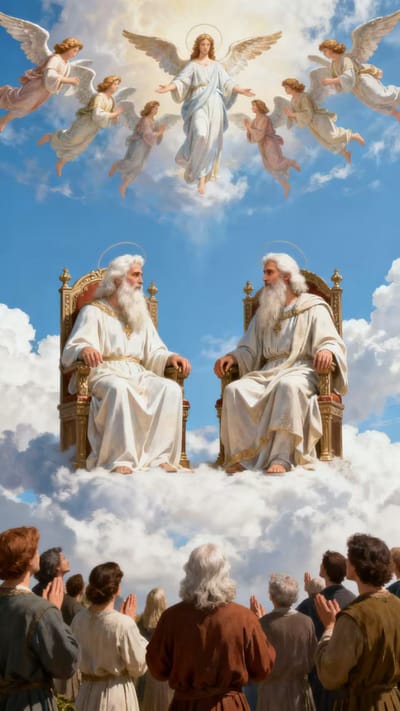
The eternal God existing in space and time fathered a Son uniquely by parthenogenesis. They jointly created the whole universe, including all the heavenly hosts, before creating humankind in their own image and likeness from the soil of the earth. Divine self-sacrifice is portrayed in both the Father and the Son as they gave of themselves that others might exist and live. Mankind's fall in Eden led to the Redemption Story, akin to the human drama of parental love, self-sacrifice, discipline and grace, leading eventually to the transformation of mankind into glorious children of God.
Read More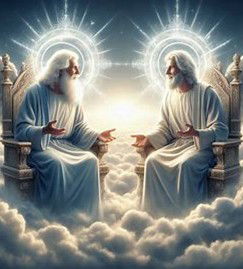
God is the Father of Glory, the head of Christ, even as Christ is head of all creation. The Father is the prime Godhead or Deity, beyond all philosophies and human traditions. He is the only true God who is above all. Christ, His only begotten, is His live model, in whom His fullness dwells.
Read More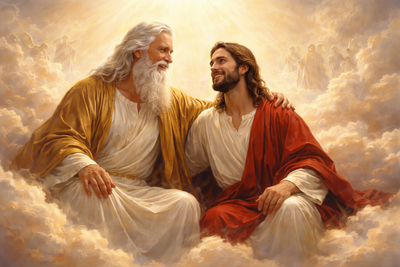
The "Corporeal God" view posits that Jesus is not a metaphor for God, but the literal manifestation of God. He is the "exact imprint" of a Father who is a personal, localized, and glorified Being. Under this logic, the Incarnation was not God taking on a "foreign" shape, but the Eternal Son stepping into the mortal version of the form He and His Father have shared from eternity.
Read More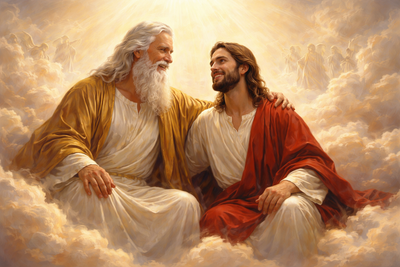
The "Exact Imprint" of Hebrews 1:3 is the definitive bridge between the Father's hidden majesty and the Son's manifested reality. The Father is the Source-Form (Spirit-Substance), and the Son is the Expressed-Form (the Imprint). Together, they share a complex, glorious, and objective nature that defines the very shape of deity. The "Exact Imprint" is the DNA of the Godhead. It establishes that the Son is the tangible manifestation of a Father who possesses a glorious, objective, and complex spiritual form. Invisibility is a temporary state of human limitation, but "Face-to-Face" communion is the eternal destiny of the believer.
Read More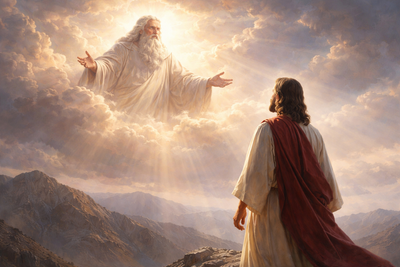
Alan Segal’s "Two Powers in Heaven" (1977) is considered a seminal work that fundamentally shifted the scholarly understanding of the relationship between early Judaism and Christianity. Before Segal, many scholars viewed high Christology (worshiping Jesus as God) as a pagan influence that invaded Jewish monotheism. Segal demonstrated that this concept was actually rooted in pre-Christian Jewish thought. Binitarian Roots: His work proved that a "binitarian" view of God existed in Judaism as early as the late 3rd century BCE, providing a Jewish theological framework for later Christian devotion to Jesus.
Read More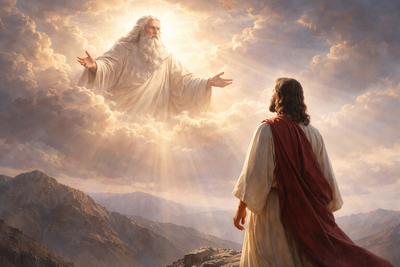
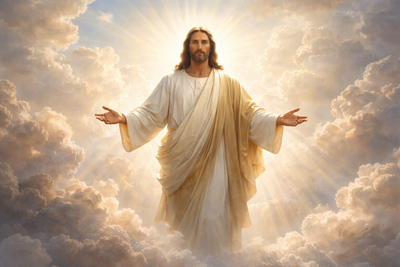
Examines how John’s Gospel conveys Jesus Christ’s existence before the world began, emphasizing the theological implications of the Word being toward (Greek literal) God and being God, and of creation occurring through Him. The piece introduces a structured approach to gathering relevant scriptures and sets a professional, commentary-driven tone that integrates AI output with the author’s observations.
Read More
A Study of “Eternal Torment” (concept of hell) from Google AI, with my comments. Interpretations from various traditions and how scripturally accurate these interpretations are. Ai moves into a fascinating and wide-ranging exploration that tracts the evolution of "Hell" from a physical place of fire to a psychological state, and finally to the modern resurgence of traditionalism as a reaction to that shift.
Read More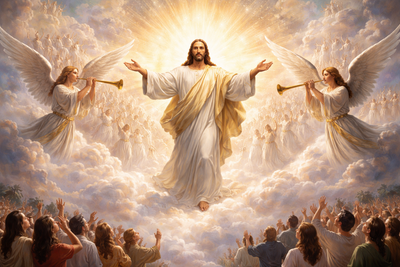
A comprehensive treatment on Universal Reconciliation by Thomas Allin in his 1885 book "Christ Triumphant" which has wide influence on churches and individuals. Summarized by Ai.
Read More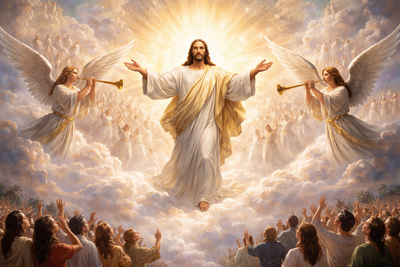
This article begins with a direct prompt focused on 1 Corinthians 15:28 and asks for both literal translation and interpretive exploration. It concentrates on how grammatical details shape meaning-especially the relationships implied between “all things,” the Son, and God. The article’s thrust is to show how the verse communicates final consummation rather than mere hierarchy, stressing God’s comprehensive presence and sovereignty.
Read More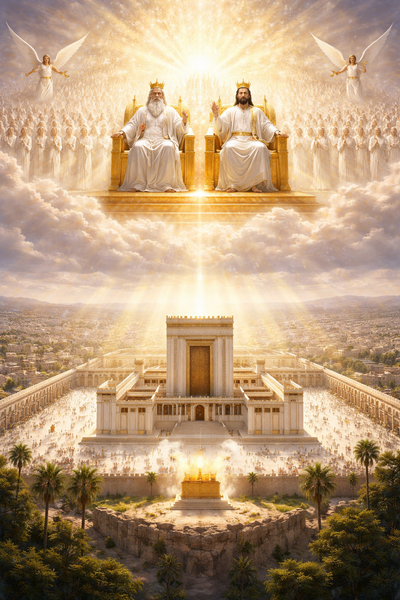
Drawing on my discussion/interaction with Google AI, the article references scriptures that are often cited to demonstrate Paul’s distinctive emphasis and calling. It encourages readers to compare passages carefully, evaluate context, and develop a holistic framework that maintains biblical continuity while recognizing differences in emphasis between grace-centered and kingdom-centered presentations of the gospel.
Read More
This article provides a concise theological overview of how moral law functions in salvation and Christian living. It explains that nomianism treats obedience as necessary for earning or maintaining salvation, often criticized for undermining grace and fostering performance-based spirituality. Set against antinomian tendencies, the article encourages careful distinctions so that grace remains the foundation of salvation while moral law is understood in its proper place.
Read More