The Shroud of Turin
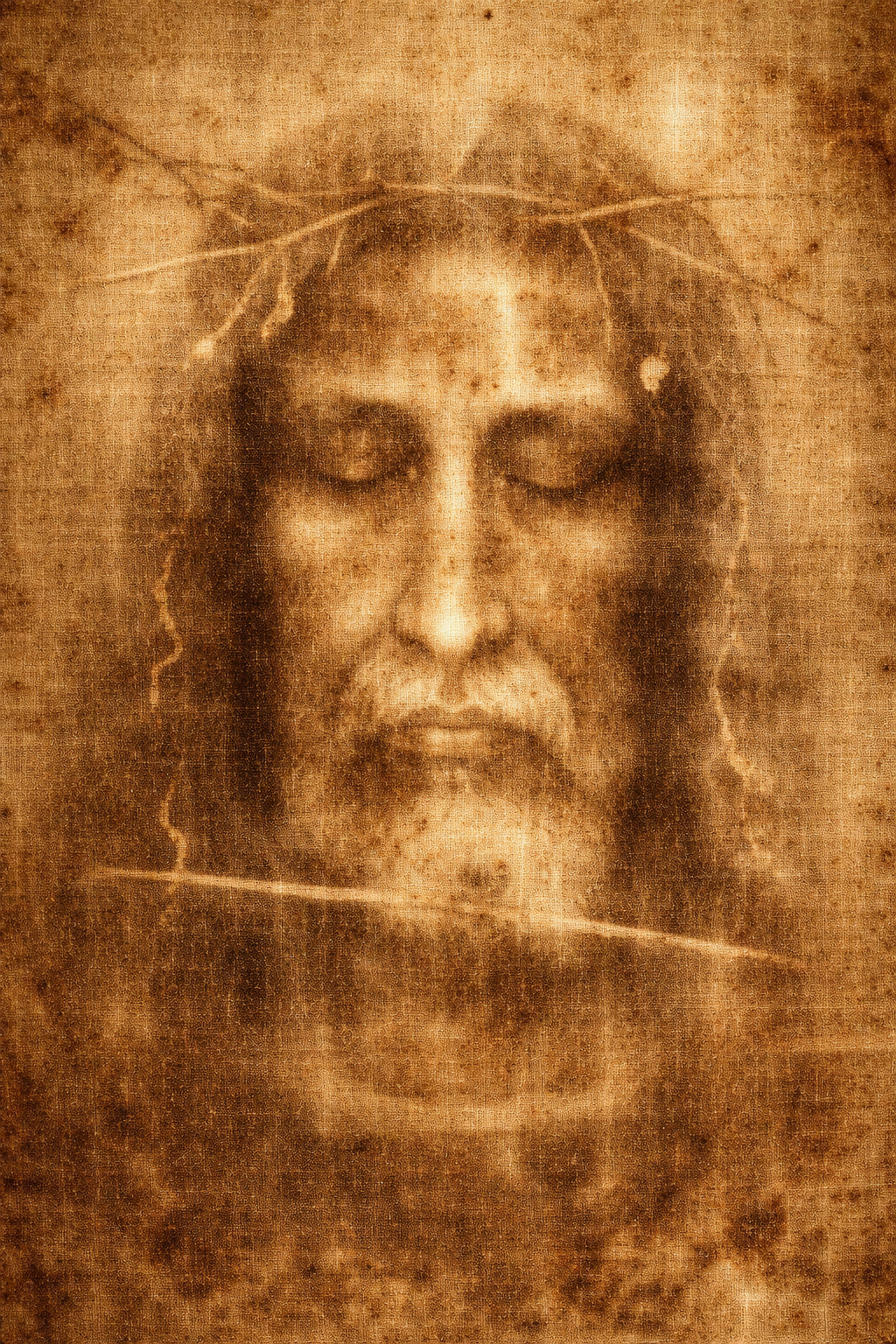
Summary by AI:
The Shroud of Turin is a 4.4-metre-long linen cloth bearing the faint, sepia-toned image of a man who appears to have suffered physical trauma consistent with crucifixion. For centuries, many Christians have venerated it as the actual burial cloth of Jesus Christ, though its authenticity remains one of the most debated topics in both religious and scientific circles. Wikipedia +3
Quick Facts
- Material: Linen in a 3:1 herringbone twill weave.
- Current Location:Turin Cathedral (Cathedral of St. John the Baptist) in Italy.
- First Recorded Appearance: 1354 in Lirey, France.
- Key Property: The image possesses the characteristics of a photographic negative.
Wikipedia +5
Scientific & Historical Debate
The shroud's origins are polarized between medieval and ancient theories:
- Radiocarbon Dating: A landmark 1988 study by laboratories in Oxford, Zurich, and Arizona concluded with 95% confidence that the cloth dates to between 1260 and 1390 AD. This matches its first documented appearance in historical records.
- Recent Research (2022–2026): Newer studies have challenged the 1988 findings. In 2022, a study using Wide-Angle X-ray Scattering (WAXS) suggested the linen's structural degradation is compatible with fabric from 55–74 AD. Furthermore, DNA analysis released in April 2026 identified genetic traces from the Near East and India, suggesting the cloth traveled through the Middle East or was made with Indian yarn.
- Image Formation: No consensus exists on how the image was created. It is extremely superficial, affecting only the topmost fibers, and contains 3D information that researchers have struggled to replicate using medieval artistic techniques.
Wikipedia +6
Religious Significance
The Catholic Church maintains a neutral stance, neither officially confirming nor rejecting its authenticity as a relic. Instead, popes including John Paul II and Pope Francis have referred to it as an "icon" of suffering and a "mirror of the Gospel," encouraging the faithful to use it as an object of meditation on the Passion of Christ. Wikipedia +2
Visiting and Viewing
The original shroud is kept in a climate-controlled, bulletproof case and is rarely displayed to the public. Major exhibitions (ostensions) usually occur once every few decades, though digital initiatives now allow for permanent online viewing. A life-size replica is available for viewing at the Museum of the Shroud in Turin.
More about the specific results of the 2026 DNA study.
The April 2026 DNA study, conducted by geneticists at the University of Padova in Italy, revealed that the Shroud of Turin contains a far more complex "genetic passport" than previously understood. By re-analyzing dust and fibers vacuumed from the cloth in 1978, the team identified a wide array of human, animal, and plant DNA that suggests the relic traveled extensively across the globe.
1. Key Finding: The Indian Connection
The most striking result was that 38.7% to 40% of the human mitochondrial DNA found on the shroud belongs to lineages typical of the Indian subcontinent. New Scientist +1
- Indus Valley Origin: Researchers suggest the linen yarn itself may have been produced in the ancient Indus Valley (modern-day Pakistan and northwest India).
- Etymological Link: The study notes that the Greek word for the shroud, Sindôn, likely derives from "Sindia" or "Sindh," a region famous for its high-quality fine linen.
- Botanical Support: Traces of plants native to India, such as the Cowpea, were also identified, further supporting an Eastern origin or extensive travel through Indian trade routes.
2. Evidence of Middle Eastern Passage
The study also confirmed a significant Middle Eastern presence on the cloth, including:
- Haplogroup H33: This genetic marker is prevalent in the Near East and frequent among the Druze population, who share ancestry with Jews and Levantine groups.
- Saline Microbes: Researchers detected halophilic archaea—microorganisms that thrive in extreme salt—suggesting the shroud was once kept in a saline environment like the Dead Sea.
Vatican News +1
3. Biological "Mosaic" of History
Beyond human markers, the shroud acted as a biological sponge for a "zoo" of environmental DNA:
- Animal Traces: DNA from dogs, cats, chickens, horses, deer, and even Atlantic cod was found, reflecting centuries of exposure to different cultures and rural environments.
- Post-Columbus Plants: Traces of potatoes, tomatoes, and peanuts were identified. Since these are native to the Americas and reached Europe only after the late 15th century, they confirm that the shroud continued to accumulate "contamination" long after its first recorded appearance in France.
4. Scientific Caution
While enthusiasts see these results as proof of an ancient, global journey, the researchers emphasize that contamination remains the biggest challenge. Because the shroud has been touched by countless pilgrims and priests over centuries, it is nearly impossible to isolate the "original" DNA of the man depicted on the cloth. Consequently, the study concludes that while the DNA provides a vivid map of where the shroud has been, it does not definitively prove when the cloth was made or confirm its authenticity as the burial shroud of Jesus. New Scientist +4
The 2022 WAXS study that compared this fabric's degradation to 1st-century linen.
A 2022 study by Liberato De Caro utilizing Wide-Angle X-ray Scattering (WAXS) found that the structural degradation of the Shroud of Turin's linen is compatible with a 1st-century origin, roughly 55–74 AD. This analysis challenges the 1988 radiocarbon dating by suggesting the fabric is approximately 2,000 years old, although the findings await independent replication. Read the full study in MDPI.
Britannica +3
Shroud.com
This database provides free access to a vast collection of research and archives for anyone wishing to delve deeper into the topic.
Videos:
A recent YouTube video on the latest research, with an overview of the Shroud’s history: Scientists Found Secret 3D-Encoded DNA in the ‘Shroud of Turin’ — What It Revealed Left Them Stunned. https://youtu.be/W1KLcKW45o8?si=emyj8JSWUbkGpXql
Another video, a dialogue between two researchers
NEW EVIDENCE REVEALED: What No One Ever Told You About the Shroud of Turin w/Jeremiah J. Johnston. https://youtu.be/rVNc9Dlnj2A?si=C4SNG0N_9VirYSm7
Tony Yeap
8 April 2026