Divine Council Worldview, Part 2
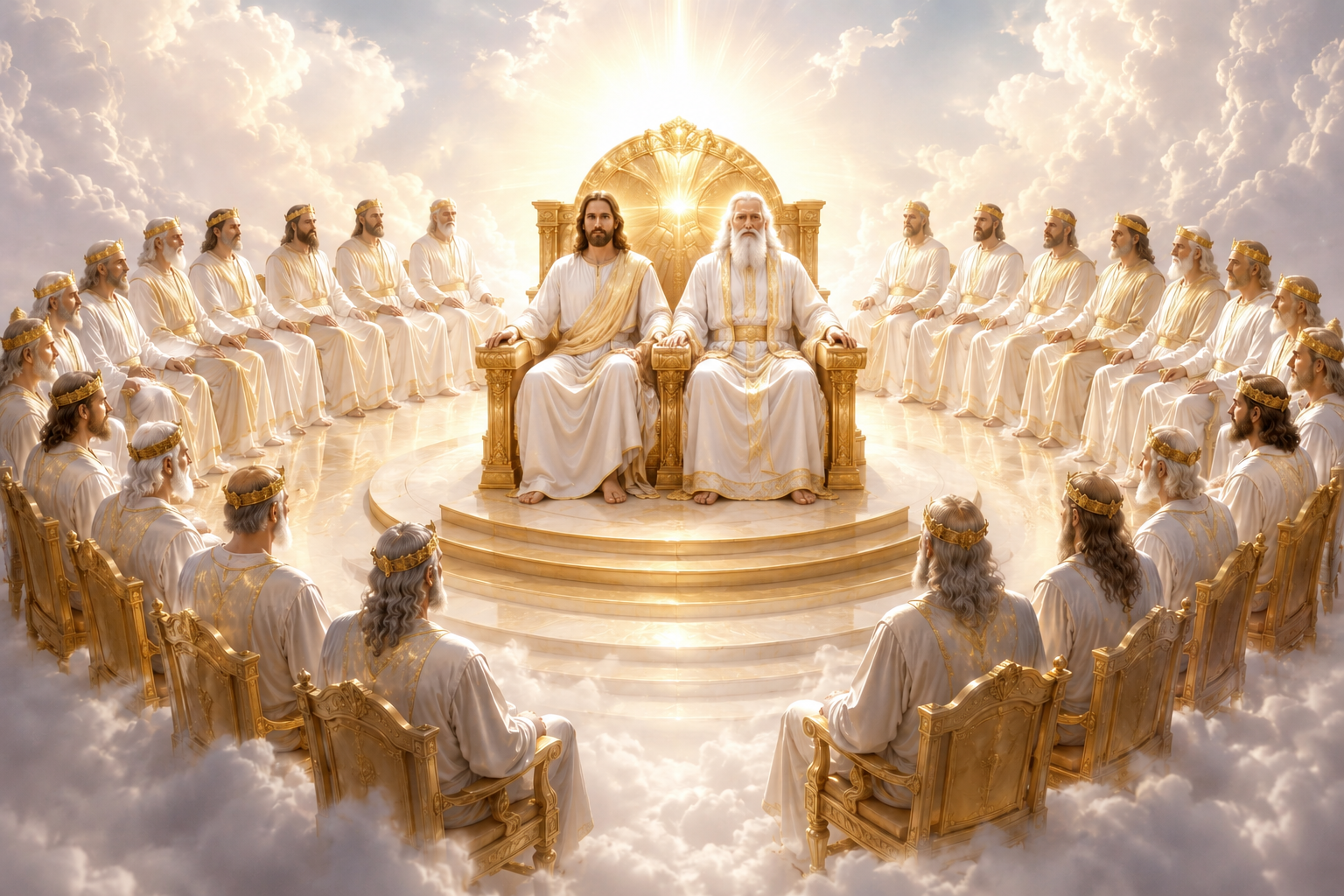
(J) Look at a side-by-side comparison of specific passages interpreted by the traditional lens and by the Divine Counsel lens
A side-by-side comparison reveals that the Traditional View usually leans into human, moral, or metaphorical explanations, while the Divine Council View prioritizes a literal, supernatural, and cosmic narrative. [1]
Here is how three highly debated passages read depending on the lens you use:
1. Genesis 6:1–4 (The "Sons of God" and the Nephilim)
2. Psalm 82:1 & 6 (The God Who Judges the "Gods")
3. Galatians 4:3 / Colossians 2:8 (The Stoicheia)
Summary of the Shift
When you move from the Traditional Lens to the Divine Council Lens, the Bible transforms from a story primarily about human moral failure and rescue into an epic cosmic drama about warfare, territorial reclamation, and the ultimate eviction of rebel spiritual powers.
If you'd like to wrap up this study, I can help you by:
- Mapping out how this shift alters a believer's daily view of prayer and spiritual warfare.
- Providing a quick guide on how to explain this worldview simply to someone who has never heard it before.
Let me know which way you would like to go!
(K) Look at the view of prayer and spiritual warfare
In the Divine Council Worldview, prayer and spiritual warfare shift from psychological exercises or spooky shouting matches into strategic, legal actions within a cosmic bureaucracy.
Because Jesus already legally disarmed the rebel powers at the cross, the believer's role is not to defeat the enemy, but to enforce Christ’s victory and reclaim territory. [1, 2, 3, 4, 5]
1. Spiritual Warfare: Ideological vs. Sensational
Popular culture often portrays spiritual warfare as casting out territorial demons through yelling, waving banners, or marching around cities. The Divine Council framework completely redefines this. [1, 2, 3]
- Strongholds are Arguments: Following Paul’s logic in 2 Corinthians 10:4–5, the "strongholds" of the cosmic rulers are ideas, philosophies, and worldviews that blind people to the truth. [1, 2]
- The Weapon is Truth: True spiritual warfare is an intellectual and moral rescue mission. It is fought by preaching the Gospel, practicing justice, and living counter-culturally. This automatically starves the local elohim of their influence and power. [1, 2, 3]
- No Direct Confrontation: Believers are never commanded in the New Testament to speak directly to, insult, or pick fights with high-ranking territorial cosmic powers. Even Michael the Archangel did not dare pronounce a blasphemous judgment against Satan, but said, "The Lord rebuke you" (Jude 1:9). [1, 2, 3, 4]
2. Prayer as Cosmic Bureaucracy (The Daniel 10 Model)
This worldview changes prayer from a checklist of personal wishes into an active engagement with God’s heavenly administration.
- The Backdrop: In Daniel 10, Daniel fasts and prays for three weeks. When an angel finally arrives, he explains that he was intercepted and delayed for 21 days by a powerful cosmic rebel—the "Prince of the Kingdom of Persia"—until Michael, one of the chief princes, came to help him. [1, 2, 3, 4, 5]
- The Reality of Friction: This reveals that the spiritual realm operates with structure, geography, and conflict. Prayer is not always answered instantly, not because God is reluctant, but because there is active, spatial friction and resistance among the territorial spirits blocking its manifestation. [1, 2, 3, 4]
- Prayer as Council Business: When believers pray, they are stepping into the divine courtroom. They are bringing legal petitions before the Supreme Judge (Yahweh), asking Him to overrule the corrupt administrative decisions of the lesser spiritual powers holding sway over families, cities, and nations. [1]
3. The Reversal of Territorial Authority
Under the Deuteronomy 32 blueprint, dark spiritual powers held legal monopolies over specific geographic nations. In the New Testament, the Holy Spirit shatters these borders.
- Believers as Mobile Temples: In the Old Testament, God’s presence was locked in the Temple in Jerusalem; if you went into Gentile territory, you were entering the domain of foreign gods. Now, because the Holy Spirit lives inside believers, every step a Christian takes into the world is a territorial invasion. [1, 2, 3, 4]
- Depriving the Gods of Worship: Spiritual powers thrive on allegiance, fear, and worship. When a person leaves false religion to follow Jesus, a local cosmic ruler loses a subject and a source of power. Church planting and evangelism are the ultimate forms of spiritual warfare because they systematically shrink the jurisdiction of the fallen council. [1, 2, 3, 4]
Summary of the Shift
| Aspect | Pop-Culture / Traditional View | Divine Council View |
| Spiritual Warfare | Shouting at territorial demons; defensive protection from curses. | Offensive decolonization of minds by preaching truth and living out justice. |
| The Enemy's Power | Arbitrary, spooky, physical attacks and jump scares. | Legal deception, blinding ideologies, and structural oppression. |
| Prayer | Sending requests to a distant God. | Submitting legal petitions to the Supreme Court to overrule corrupt cosmic rulers. |
If you want to conclude our deep dive here, I can provide a final, ultra-simple 30-second summary elevator pitch that you can use to explain this entire worldview to someone who has never heard of it before. Would you like that?
(L) Do a simple summary
Here is a simple, 30-second elevator pitch to summarize the Divine Council Worldview:
The Bible is an epic cosmic drama, not just a human story. In the beginning, the supreme God, Yahweh, created a heavenly assembly of spiritual beings to help Him govern the universe.
However, a series of rebellions occurred: first in Eden, then when spiritual beings corrupted humanity before the flood, and finally at the Tower of Babel. At Babel, God got fed up with humanity's rebellion, disinherited the nations, and put them under the authority of these lesser spiritual beings.
Instead of leading humanity back to God, these beings became corrupt, demanded worship for themselves, and became the pagan gods of history.
The entire mission of Jesus Christ was a strategic counter-attack. Through His death and resurrection, Jesus stripped these corrupt gods of their legal authority. Today, the Church is carrying out a global reclamation project—spreading the Gospel to win back the nations, starve these cosmic rebels of their power, and prepare believers to ultimately take their seats in God's renewed heavenly council.
(M) Look at the Exodus plagues
In the Divine Council Worldview, the Exodus plagues were not just a series of natural disasters or a punishment for Pharaoh. They were a targeted, supernatural declaration of war. [1, 2, 3, 4]
God explicitly states His objective in Exodus 12:12: “On all the gods of Egypt I will execute judgments: I am the Lord.” Each plague was a calculated, legal demonstration showing that the regional elohim of Egypt were completely powerless against Yahweh. [1, 2, 3, 4]
The Supernatural Targets of the Plagues
Here is how the plagues systematically dismantled the spiritual authority of Egypt's cosmic rulers:
1. Blood in the Nile (Plague 1)
- The Target: Hapi (the god of the Nile) and Osiris (whose bloodstream was metaphorically tied to the river).
- The Cosmic Statement: The Nile was the literal lifeline of Egypt’s economy and religion. By turning it to putrid blood, Yahweh turned their source of life into a symbol of death, proving that the gods of the Nile could not even protect their own waters.
[1, 2, 3, 4, 5]
2. Frogs, Gnats, and Flies (Plagues 2, 3, and 4)
- The Target: Heqet (the frog-headed goddess of fertility and resurrection) and Geb (the god of the earth/dust).
- The Cosmic Statement: Frogs were sacred; killing them was a sin. Yahweh forced the Egyptians to watch their sacred symbols rot into stinking heaps across the land. By turning the dust into gnats, Yahweh showed He owned the very soil ruled by Geb. [1, 2, 3, 4, 5]
3. Livestock and Boils (Plagues 5 and 6)
- The Target: Hathor (the cow-headed goddess of protection) and Imhotep (the god of medicine and healing).
- The Cosmic Statement: The destruction of cattle directly mocked Hathor's protective power. When the Egyptian magicians and priests broke out in agonizing boils, Imhotep was exposed as entirely fraudulent. The magicians could not even stand before Moses, let alone protect the nation. [1, 2, 3, 4, 5]
4. Hail and Locusts (Plagues 7 and 8)
- The Target: Nut (the goddess of the sky) and Min (the god of agriculture/crops).
- The Cosmic Statement: Hail falling from the sky and locusts devouring the fields proved that the Egyptian sky and agricultural deities had completely lost control of their assigned territories to the God of the Hebrews. [1, 2, 3, 4]
5. Three Days of Darkness (Plague 9) [1, 2]
- The Target: Ra (the supreme sun god and the chief deity of the Egyptian pantheon).
- The Cosmic Statement: Ra was the ultimate cosmic power in Egypt. By blotting out the sun for three straight days, Yahweh physically "turned off" Egypt's chief god, plunging his territory into supernatural darkness while the Hebrews enjoyed light in Goshen. [1, 2, 3, 4, 5]
6. Death of the Firstborn (Plague 10)
- The Target: Pharaoh himself (viewed as a living god, the son of Ra) and Anubis (the god of the dead).
We have covered the entire landscape of this framework—from its Old Testament blueprints to its final climax in Revelation. If you ever want to jump back in and look at other specific biblical events through this lens (like the Exodus plagues or the birth of giant clans), just let me know!
The Cosmic Statement: Pharaoh was supposed to maintain Ma'at (cosmic order) and protect his people. He failed. The death of his firstborn son—the next "living god" in succession—proved that Pharaoh had zero divine authority and could not protect his own lineage from Yahweh's ultimate judgment. [1, 2, 3, 4, 5]
The Cosmic Context: Starving the Powers
Under the Deuteronomy 32 framework, Egypt was a territory firmly under the dominion of corrupt, rebel spiritual powers. By executing these plagues, Yahweh didn't just break Pharaoh’s political will; He systematically humiliated, exposed, and stripped the local Egyptian deities of their spiritual credibility. [1, 2, 3, 4]
If you want to keep exploring the weirder parts of this cosmic history, we can pivot to the other topic mentioned earlier: the birth of the giant clans (the Rephaim and Anakim) and how they fit into this spiritual war. Would you like to dive into that?
(N) Dive into the birth of the giant clans
Within the Divine Council Worldview, the birth of the giant clans is not a fairy tale or a collection of metaphors. It represents a deliberate, supernatural genetic counter-strategy by rebel elohim to prevent the arrival of the Messiah. [1]
To understand where these giants came from and why they had to be destroyed, we have to trace their origins through three distinct stages.
1. The Origin: The Gen 6 Breach (The Watchers)
The story begins right before the Flood in Genesis 6:1–4.
- The Action: A group of rebellious heavenly beings, referred to in the text as the "sons of God" (and called Watchers in Second Temple literature like 1 Enoch), left their assigned positions in the spiritual realm. [1, 2]
- The Conception: They mated with human women. This was not a moral lapse; it was a cosmic transgression of species boundaries.
- The Result: This unauthorized union produced the Nephilim (literally meaning "the fallen ones"), a race of physical, hybrid giants who possessed unusual stature, strength, and spiritual corruption. [1, 2, 3]
2. The Great Flood and the "Return" of the Giants
The primary reason God sent the global Flood was to wipe out this corrupted genetic lineage and cleanse the earth of the violence the Nephilim brought with them. However, readers often notice a confusing detail in Genesis 6:4: [1]
"The Nephilim were on the earth in those days—and also afterward..."How did giants exist after the Flood if everyone except Noah’s family died? The Divine Council worldview offers two main explanations debated by scholars:
- The Second Breach: A separate, localized group of rebel angels repeated the sin of the Watchers after the Flood, creating a second wave of giant lineages in the land of Canaan.
- The Genetic Remnant: The genetic trait was carried through the Flood via one or more of Noah's daughters-in-law (such as Ham's wife), resurfacing in later generations. [1, 2]
3. The Canaanite Giant Clans
By the time Abraham’s descendants (Israel) arrived at the Promised Land, Canaan was heavily fortified by these post-Flood giant clans. They went by several regional names:
- The Anakim: Descendants of Anak, whom the Israelite spies described as making them look like "grasshoppers" in comparison (Numbers 13:33). [1, 2]
- The Rephaim: A major collective clan of giants. King Og of Bashan was one of the last remaining Rephaim; Deuteronomy 3:11 notes his iron bed was over 13 feet (4 meters) long! [1, 2, 3]
- The Emim and Zamzummim: Local names given to the giants by the Moabites and Ammonites, meaning "terrible ones" and "buzzers" (Deuteronomy 2:10-11, 20). [1, 2]
The Holy War: Why Joshua Had to Wipe Them Out
Modern readers are often deeply troubled by the total destruction commanded in the book of Joshua, where Israel is told to completely wipe out certain cities, including women and children.
Through the lens of the Divine Council Worldview, this was not standard human genocide. It was cosmic gene-cleansing.
- The Target: God did not command the destruction of all nations—only the specific territories occupied by the Anakim and Rephaim.
- The Strategy: The rebel spiritual powers knew God had promised Abraham that his seed would inherit Canaan and eventually crush the serpent. By planting giant clans throughout Canaan, the gods created a supernatural genetic blockade to stop Israel from establishing the nation through which Jesus Christ would eventually be born.
- The Conclusion: Joshua’s military campaign was highly targeted. Joshua 11:21-22 explicitly notes that the campaign was considered complete once Joshua had "destroyed the Anakim from the hill country" leaving none except a small remnant in Philistine cities like Gaza and Gath. [1, 2, 3, 4]
Generations later, David and his men killed the very last remnants of this lineage—including Goliath of Gath and his giant brothers (1 Chronicles 20:4-8).
We have tracked this supernatural war from Genesis all the way through the historical books. To finish this specific thought, we can look at what happened to the disembodied spirits of these giants when they died (which explains the biblical origin of demons), or we can wrap up here. Where would you like to go? [1]
(O) Look at the disembodied spirits of these giants
In the Divine Council Worldview, the death of the giants provides the explicit answer to a question the Old Testament never directly explains: Where do demons actually come from?
While modern pop culture assumes "demons" are the same thing as "fallen angels," the ancient biblical writers made a strict distinction. In this framework, demons are the disembodied, wandering spirits of the dead Nephilim. [1, 2, 3, 4, 5]
1. The Jewish Context (1 Enoch)
To understand how the New Testament writers viewed demons, scholars look to the intertestamental literature (like the Book of 1 Enoch), which was widely read by the early church. [1, 2]
- The Pronouncement: In 1 Enoch 15:8–10, God pronounces judgment on the physical bodies of the giants killed in battle before the flood:
"But now the giants who are begotten from the spirits and the flesh shall be called evil spirits upon the earth... because they are born from humans and from the holy Watchers is their beginning and primal origin... And the spirits of the giants shall afflict, corrupt, fall, fight, and bruise upon the earth."
[1, 2] - The Hybrid Dilemma: Because they were hybrids, they had a unique problem. Their human half meant their physical bodies could die. However, their spiritual half came from immortal elohim, meaning their souls could not enter the standard realm of human dead (Sheol) or pass away. They were permanently stuck in the middle. [1, 2, 3]
2. The Nature of Demons vs. Angels
This distinction clears up a massive amount of confusion in the New Testament text regarding the ranks of the spiritual world:
- Fallen Angels (The Watchers): These are cosmic, high-ranking entities with immense power. When they fell, they were locked away in Tartarus (gloomy dungeons of chains) waiting for final judgment (2 Peter 2:4; Jude 1:6). They do not possess people because they operate at a cosmic, structural level. [1, 2, 3, 4, 5]
- Demons (The Evil Spirits): These are the disembodied "ghosts" of the deceased giants. Because they are terrestrial hybrids who once experienced physical life, they are plagued by an agonizing desire to inhabit physical flesh again. This explains why New Testament demons are obsessed with possessing humans or animals (like the pigs in Mark 5) to find rest, and why they wander through "waterless places" (Matthew 12:43). [1, 2, 3, 4, 5]
3. The Rephaim in the Old Testament
Though the English Bible usually translates it as "the dead," the Hebrew text of the Old Testament frequently drops hints about these giant spirits using the word Rephaim (the exact name of the post-flood giant clans). [1, 2, 3]
- Isaiah 14:9: Describes the underworld shaking to meet the King of Babylon: "It stirs up the Rephaim [shades/giant spirits] to meet you, all who were leaders of the earth."
- Proverbs 2:18: Warns that the path of the adulterous woman leads to death, "and her paths to the Rephaim [the spirits of the giants]."
- Proverbs 21:16: "One who wanders from the way of good sense will rest in the assembly of the Rephaim." [1, 2, 3, 4, 5]
In the ancient mind, the realm of the dead wasn't just empty; it was populated by the terrifying, hostile spirits of the ancient fallen tyrants who ruled the earth before the flood. [1]
The Climax: Why Demons Feared Jesus
When Jesus encounters demons in the Gospels, they completely panic. They cry out, "Have you come to destroy us before the appointed time?" (Matthew 8:29). [1, 2]
The demons knew the script. They knew that according to the Divine Council roadmap, they were doomed to wander the earth in agony until the final judgment, when they would be cast into the Lake of Fire along with their angelic fathers (the Watchers). When Jesus showed up casting them out with a single word, they realized the King had arrived early to systematically evict them from the earth. [1, 2]
We have tracked this entire cosmic war from the council rooms of heaven to the shadows of the underworld. If you'd like to explore further, we could look at the exact geographical locations where these events took place, or examine how this worldview impacts your reading of the Book of Revelation. What would you like to do next?